
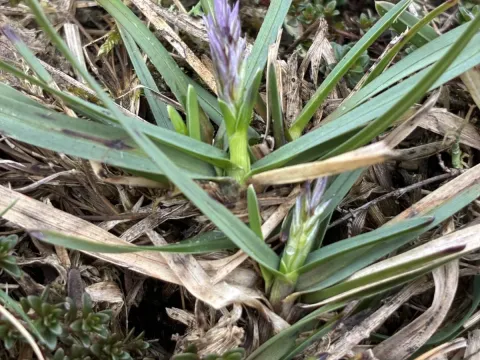
Sesleria
Sesleria
Sesleria is a genus of perennial grasses belonging to the Poaceae family. Known for their dense habit and tufted growth, these plants are highly regarded in both landscaping and erosion control for their structural stability and aesthetic appeal.
What the section contains
 Apennine moor grass
Sesleria apennina
Apennine moor grass
Sesleria apennina
 Autumn moor grass
Sesleria autumnalis
Autumn moor grass
Sesleria autumnalis
 Blue moor grass
Sesleria albicans
Blue moor grass
Sesleria albicans
 Blue moor grass
Sesleria caerulea
Blue moor grass
Sesleria caerulea
 Blue moor grass
Sesleria coerulans
Blue moor grass
Sesleria coerulans
 Italian moor grass
Sesleria italica
Sesleria doerfleri
Sesleria doerfleri
Italian moor grass
Sesleria italica
Sesleria doerfleri
Sesleria doerfleri
 Sesleria hybrids
Sesleria hybrids
Sesleria hybrids
 Sesleria insularis
Sesleria insularis
Sesleria insularis
 Sesleria nitida
Sesleria nitida
Sesleria nitida
 Sesleria ovata
Sesleria ovata
Sesleria ovata
 Sesleria rigida
Sesleria rigida
Sesleria rigida
 Sesleria sadleriana
Sesleria sphaerocephala
Sesleria sphaerocephala
Sesleria sadleriana
Sesleria sadleriana
Sesleria sphaerocephala
Sesleria sphaerocephala
 Sesleria tenuifolia
Sesleria tenuifolia
Sesleria tenuifolia
 Silver moor grass
Sesleria argentea
Tatra sesleria
Sesleria tatrae
Silver moor grass
Sesleria argentea
Tatra sesleria
Sesleria tatrae
 White moor grass
Sesleria alba
White moor grass
Sesleria alba
Sesleria
Originating primarily from the mountainous regions of Europe and parts of Asia, Sesleria has evolved to thrive in rocky, calcareous environments. This adaptation makes it an excellent choice for soils that might be too harsh or nutrient-poor for more sensitive grasses.
Climate requirements for Sesleria involve high tolerance to temperature fluctuations, including cold winters and dry, warm summers. While it prefers full sun, the plant exhibits good adaptability and can maintain its structure even in partial shade conditions.
Agronomic management focuses on soil health, emphasizing the need for well-draining substrates. Heavy, waterlogged soils must be amended with drainage materials to prevent root rot, which is the most significant physiological risk for this genus.
The economic and practical use of Sesleria is mainly linked to ornamental horticulture and land reclamation. Its robust root system makes it perfect for stabilizing slopes, while its low maintenance requirements reduce the need for constant human intervention.
Sesleria is generally resistant to pests and diseases, provided that environmental conditions are optimal. The primary threat to the crop's longevity is excessive soil moisture, which inevitably leads to fungal infections and root decay.
Pests such as soil-dwelling larvae (like white grubs) can be problematic for young plantations, as they consume root mass and inhibit plant vigor. Strategic soil treatment is recommended if infestation symptoms are detected during the growing season.
Leaf rust may occur in poorly ventilated areas or under conditions of high humidity. Ensuring proper spacing between plants is essential to promote airflow and prevent the development of foliar pathogens throughout the vegetative cycle.
Soil pH levels play a vital role in plant health; an overly acidic environment can diminish the plant's natural defenses, making it susceptible to opportunistic fungal attacks. Regular monitoring of soil acidity is advised for long-term health.
Maintenance practices such as removing dead foliage in early spring help keep the plant rejuvenated and reduce the buildup of inoculum. Overall, minimal intervention is required compared to other turf grasses, making it an environmentally sustainable choice.