
Sesleria tenuifolia
Sesleria tenuifolia
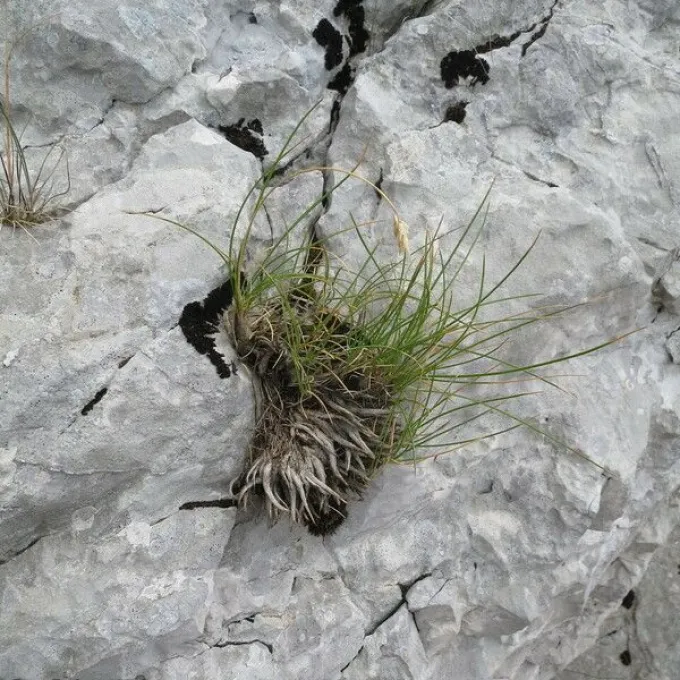
Description
Sowing dates
Sesleria tenuifolia belongs to the Poaceae family, a group of resilient perennial grasses originating from the mountainous regions of Southern Europe.
Propagation is typically achieved by sowing seeds in early spring or through division of mature clumps in late autumn or early spring to ensure rapid establishment.
Seedlings require well-draining soil and consistent moisture levels during the germination phase, which usually occurs at temperatures between 18 and 20 degrees Celsius.
When sowing in trays, it is crucial to avoid overcrowding the seeds to facilitate air circulation and minimize the risk of "damping-off" disease in the early stages.
Establishing the crop requires careful preparation of the seedbed, removing all perennial weeds to ensure the young grass faces minimal competition during the first season.
Growing requirements
This grass species is highly adaptable, thriving best in sunny locations with limestone-based or well-draining, slightly alkaline soils.
The plant demonstrates remarkable drought tolerance once established, making it a sustainable choice for xeriscaping and low-maintenance green spaces.
Sesleria tenuifolia is cold-hardy, surviving typical winter temperatures in temperate climate zones without the need for additional ground cover or protection.
Adequate soil aeration is critical for the long-term health of the root system; thus, heavy clay soils should be amended with sand or organic gravel.
Maintenance requirements are low, involving only occasional trimming of dead foliage in the early spring to promote fresh growth and maintain vigor.
Main diseases and pests
As a robust mountain grass, Sesleria tenuifolia rarely suffers from severe pest infestations, provided that cultural conditions are appropriately managed.
The primary threat to the crop is root rot caused by poor soil drainage and waterlogging, particularly during the winter dormancy period.
In hot and humid environments, the foliage may occasionally be affected by aphids or spider mites, which can be controlled through targeted horticultural soaps.
Maintaining proper plant spacing is essential to reduce the humidity levels within the canopy, thereby discouraging the development of fungal pathogens.
- Prevention of water stagnation.
- Regular inspection for pest colonies.
- Avoidance of over-fertilization with nitrogen.