
Sesleria rigida
Sesleria rigida
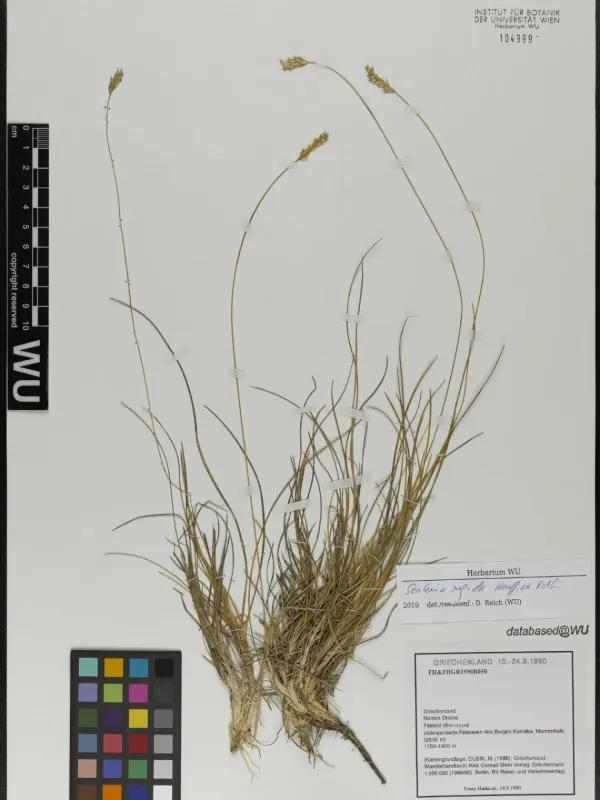
Description
Growing requirements
Sesleria rigida is a perennial herbaceous plant belonging to the Poaceae family. Native to the mountain regions of Southeastern Europe, this species is well-adapted to rocky, calcareous substrates where it grows in compact, dense tufts.
Botanically, the plant is characterized by its stiff, glaucous-green leaf blades and rigid flowering stems. Its root system is exceptionally robust, allowing the plant to thrive in nutrient-poor soils where other vegetation may fail.
The culture requires excellent soil drainage and exposure to full sun to maintain its structural integrity and distinct coloration. While it tolerates a wide range of temperatures, it is best suited for climates with well-defined seasons and low humidity levels.
In terms of agricultural management, Sesleria rigida requires very little intervention. Once established, it acts as an effective ground cover, outcompeting many common weeds and stabilizing soil on slopes.
хозяйственном использовании эта культура ценится за ее высокую декоративность в течение всего года, в том числе в зимний период, когда сухие соцветия сохраняют свою форму под снегом.
Main diseases and pests
Sesleria rigida is remarkably resistant to typical pests and diseases that affect other agricultural and ornamental grasses, contributing to its popularity in low-maintenance landscapes.
The primary threat to the health of the plants is root rot, which occurs exclusively in poorly drained or waterlogged soils. Ensuring an airy soil structure is the most effective preventative measure.
Insect attacks are rare, though minor instances of aphids may occur during prolonged dry spells. However, these rarely reach thresholds that would require the application of chemical pesticides.
Fungal issues, such as crown rust, are generally only a problem in extremely humid environments with poor air circulation, which can be mitigated by proper spacing between individual plants.
For optimal vitality, it is recommended to perform a clean-up of dead foliage in early spring, which prevents debris accumulation and promotes healthy new growth.