
Apennine moor grass
Sesleria apennina
Description
Growing requirements
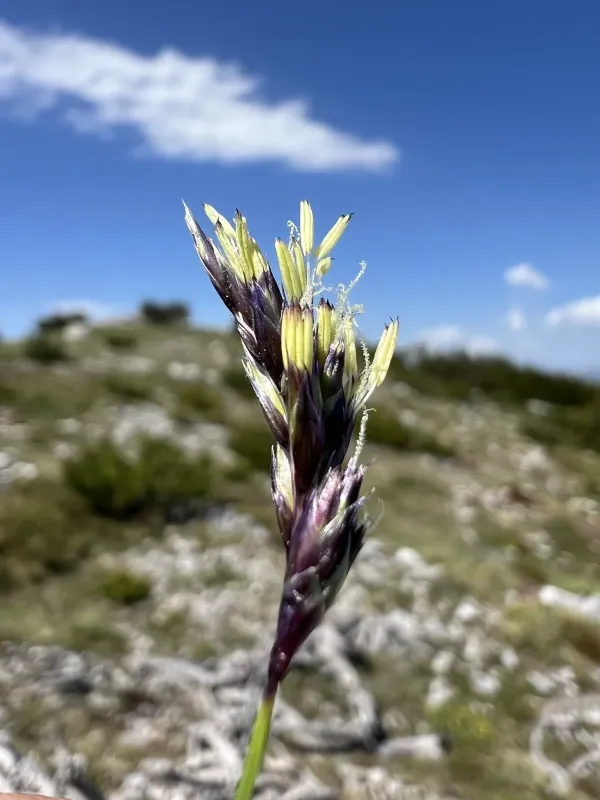
Apennine moor grass (Sesleria apennina) is a perennial ornamental grass belonging to the Poaceae family. Native to the mountainous regions of the Apennine Peninsula, this species has evolved to thrive in harsh, rocky environments with minimal nutrient availability.
The plant is defined by its compact, tufted growth habit, forming dense mounds of slender, rigid leaves. These leaves often display a distinct glaucous or blue-green color, which provides visual interest throughout the growing season and often persists late into the autumn.
Regarding cultivation requirements, this grass prefers sunny locations with well-drained, slightly alkaline, or neutral soils. It is highly intolerant of waterlogged conditions, making effective soil drainage a mandatory aspect of its successful establishment in the garden.
Agronomic maintenance is remarkably low. Once established, Sesleria apennina exhibits significant drought tolerance and can withstand both the heat of summer and the cold of winter. Fertilization is generally unnecessary, as the plant prefers leaner soil conditions.
In landscaping, this species is highly valued for its versatility. It serves as an excellent groundcover for rock gardens, gravel beds, and alpine-themed borders. Its slow-growing nature and ability to maintain a neat shape make it a favorite for low-maintenance garden design.
Main diseases and pests
Sesleria apennina is largely resistant to common pests and diseases. The primary threat to its health is overly moist soil, which can lead to fungal issues such as root rot. Proper placement in airy, well-drained areas is the best preventative measure against such conditions.
Occasional infestations by sap-sucking insects may occur during periods of extreme drought, but these are typically not lethal. Ensuring that the plant has adequate space for air circulation helps prevent the development of foliage blights and other opportunistic fungal pathogens in damp weather.