
Blue moor grass
Sesleria caerulea
Description
Growing requirements
Blue moor grass (Sesleria caerulea) is a perennial grass species belonging to the Poaceae family. It is native to limestone-rich grasslands and rocky outcrops across Europe, where it has evolved to thrive in nutrient-poor, alkaline substrates.
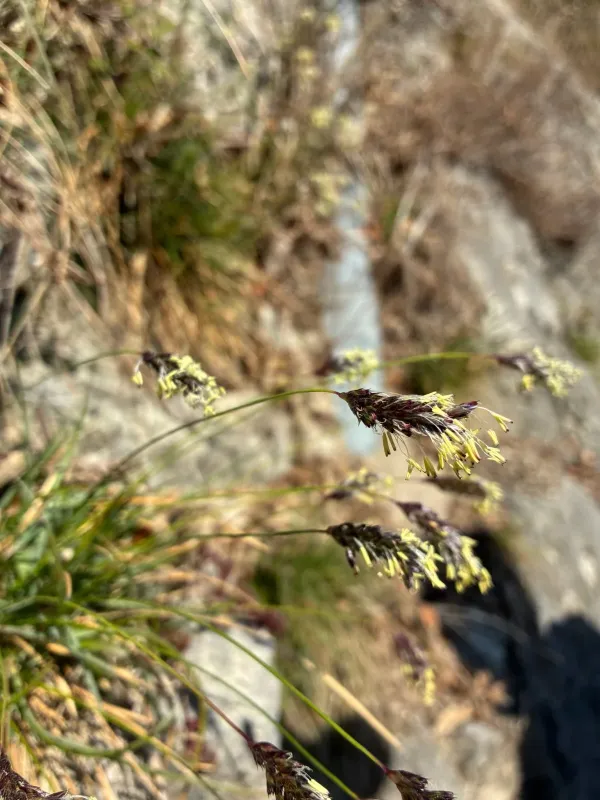
The plant is characterized by its distinctively colored foliage, which is bright blue on the upper surface and deep green on the underside. It forms compact, dense tufts that bloom in late spring with small, dark, oblong flower heads that contrast beautifully with the glaucous foliage.
Regarding environmental requirements, the species is exceptionally hardy. It prefers full sun or light shade and requires very well-drained, lime-rich soil. It is remarkably drought-tolerant once established, making it an excellent candidate for low-maintenance garden designs.
Agronomic management of Sesleria caerulea is straightforward. It requires little to no fertilizer, as overly rich soils encourage excessive, floppy growth that ruins the natural architectural form of the plant. A light tidying in early spring is generally sufficient to remove old, brown leaves.
The main agricultural and horticultural utility lies in landscape architecture. It is widely used for ground cover, as an edging plant, or as a structural element in rock gardens and herbaceous borders, thanks to its year-round appeal and resilience to environmental stressors.
Main diseases and pests
Blue moor grass is generally resistant to most plant diseases. The primary concern in cultivation is root rot, which typically occurs only in heavy, waterlogged soils where air circulation at the root level is restricted.
Pest pressure is minimal. While aphids may occasionally visit the flowering stems, they rarely cause enough damage to warrant intervention. The plant is considered a robust and trouble-free species for most temperate climate gardeners.
To ensure plant health, maintain proper spacing during planting to encourage airflow. Avoiding excessive mulch near the crown of the plant is also essential to prevent moisture accumulation and potential fungal outbreaks during dormant months.