
Italian moor grass
Sesleria italica
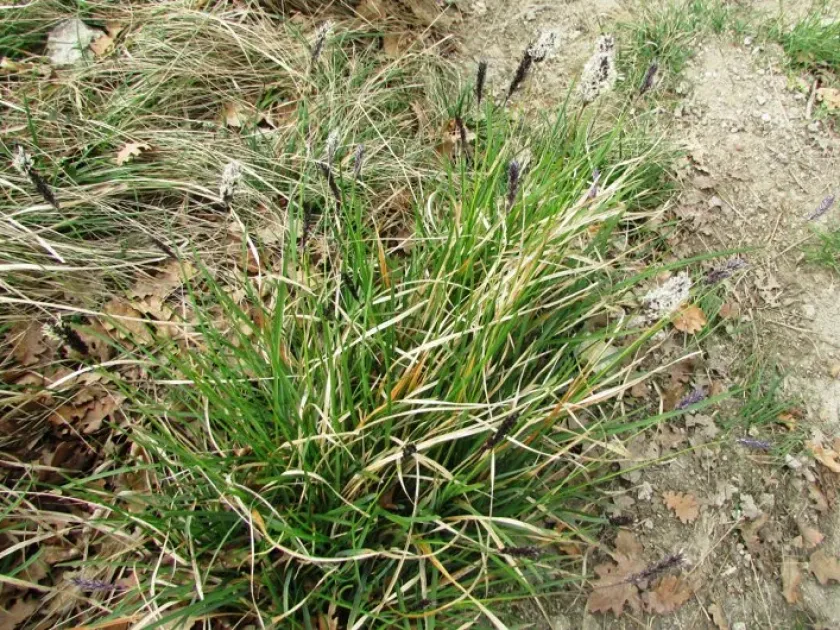
Description
Growing requirements
Italian moor grass (Sesleria italica) is a perennial herbaceous plant belonging to the Poaceae family. Native to the rocky, limestone-rich landscapes of Southern Europe, this species has evolved to thrive in nutrient-poor substrates and challenging environmental conditions.
Botanically, it forms dense, compact mounds of stiff, blue-green foliage that maintains its aesthetic appeal throughout the entire growing season. Its architectural growth habit and early spring regrowth make it a preferred choice for creating defined textures in various garden settings.
The cultural requirements are focused on providing ample sunlight and well-draining soil. While the species demonstrates some tolerance for light shade, it exhibits optimal growth and density when exposed to full sun, which highlights the vibrant coloring of its leaves.
Regarding soil composition, Sesleria italica prefers alkaline conditions and is highly tolerant of limestone-rich environments. Adequate drainage is the most critical factor, as the plant is susceptible to root damage in heavy, water-logged soils that lack sufficient aeration.
In terms of climate, the plant is remarkably hardy and capable of surviving fluctuations in temperature without special protective measures. Its inherent resilience to dry spells and low maintenance requirements make it an excellent candidate for xeriscaping and sustainable landscape design.
Main diseases and pests
Italian moor grass is generally resistant to a wide range of common agricultural and garden diseases. It rarely suffers from fungal infections such as rust or mildew, provided that the planting site has good air circulation and the soil is not subjected to constant over-saturation.
There are no significant pests that target Sesleria italica as a primary host. The rigid structure of its leaves, which is high in silica, serves as a natural deterrent to most chewing and sucking insects, thereby reducing the need for chemical pest control interventions.
The primary health risk to the species is related to soil water management. Poorly drained conditions inevitably lead to the development of root rot, which is the most common cause of plant failure. Implementing proper drainage at the planting stage is the most effective preventative measure.
Weed competition can be a concern during the initial establishment phase after planting. However, once the plant has fully established its root system and formed a dense clump, it becomes highly competitive and effectively suppresses weed encroachment in the immediate vicinity.
Overall, Sesleria italica is classified as a low-intervention ornamental crop. By focusing on initial site selection and maintaining proper soil drainage, growers can ensure the longevity and decorative quality of the grass without the need for intensive disease or pest management programs.