
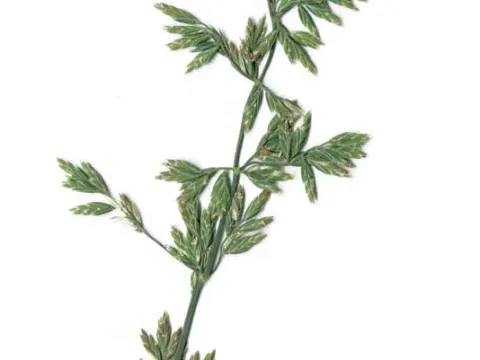
Pale bluegrass
Poa pallens
Pale bluegrass (Poa pallens) is a perennial grass species belonging to the Poaceae family. It is recognized for its significant ecological adaptability, typically found in high-altitude environments and moderate temperate zones.
What the section contains
Pale bluegrass
The plant thrives in well-drained, moderately fertile soils. It demonstrates a remarkable ability to survive in various conditions, showing good resistance to temperature fluctuations throughout the changing seasons.
Regarding climatic requirements, this species prefers regions with sufficient annual precipitation, although it can withstand short periods of moderate dryness during the peak growing season.
The root system is robust and fibrous, which provides excellent soil anchoring capabilities, making the plant an ideal candidate for erosion control on slopes and hilly terrain.
Optimal growth is achieved when the soil pH is neutral or slightly acidic, and the area is managed to prevent excessive competition from invasive weeds during the early establishment phase.
In agricultural practice, Pale bluegrass is utilized primarily as a forage grass. It provides high-quality grazing material that is palatable to livestock and rich in essential nutrients.
When harvested as hay, the crop exhibits good nutritional density, including high protein levels, which makes it a valuable component for winter feed supplies for ruminants.
The species is known for its strong regenerative capacity after grazing or mowing, allowing for multiple harvest cycles per season under professional management regimes.
It is frequently incorporated into seed mixtures for pasture development, as it promotes a dense and sustainable vegetative cover that improves the overall quality of agricultural land.
Productivity levels can be maximized by applying balanced fertilizers during the spring period, which supports strong tiller formation and increases the total vegetative yield.
Pale bluegrass is susceptible to typical grass pathogens, including rust and various leaf spot fungi, which may emerge if the fields suffer from poor drainage or inadequate air circulation.
Common agricultural pests affecting grasses, such as aphids or cereal flies, can occasionally impact the biomass yield, requiring monitoring during the most vulnerable growth stages.
Weed management remains the most critical aspect of field maintenance, as unwanted vegetation can easily suppress the establishment of perennial grasses in the first year.
Strategic grazing practices are essential to prevent the accumulation of dead plant matter, which can create a favorable microclimate for the development of fungal diseases.
By maintaining proper plant spacing and choosing the right time for harvesting, farmers can keep their fields healthy and prevent the buildup of pest and disease populations.