
Pale-yellow dropseed
Sporobolus helveolus
Description
Growing requirements
Pale-yellow dropseed (lat. Sporobolus helveolus) is a perennial grass species belonging to the Poaceae family. This plant is recognized for its remarkable ability to thrive in arid and semi-arid environments where water availability is a major limiting factor for crop production.
Originating from regions with sparse rainfall, this species has evolved deep root systems that allow it to maintain growth during prolonged droughts. It is widely regarded as a resilient forage plant, capable of providing ground cover and biomass in challenging climatic zones.
Regarding soil preferences, the plant excels in well-drained, sandy, or gravelly soils. It possesses a high tolerance for poor nutrient conditions and can handle moderate salinity, making it an excellent candidate for stabilizing degraded lands and preventing soil erosion.
Agricultural management of Sporobolus helveolus is relatively straightforward due to its low water demands. However, to maximize its forage yield, producers should focus on protecting the crown of the plant from damage during grazing cycles to ensure longevity.
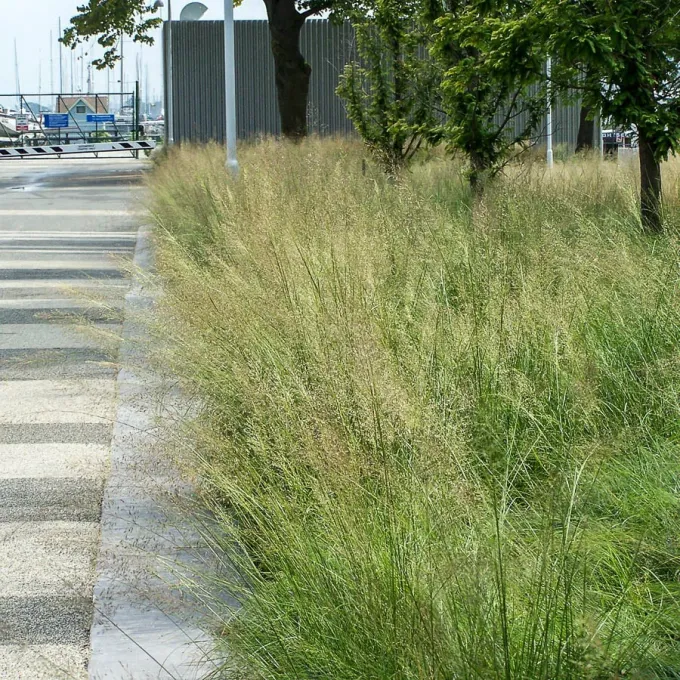
Botanically, it forms dense tussocks, which is an adaptation to reduce moisture loss and protect the inner parts of the plant. The inflorescence is a delicate, diffuse panicle, a signature trait of the genus, which enables effective wind dispersal of seeds across open landscapes.
Main diseases and pests
The primary threats to Sporobolus helveolus involve fungal infections that arise during unusually wet weather or poor drainage conditions. Leaf spot diseases are the most common issue, potentially reducing the nutritional quality of the forage if left unmanaged.
Pest pressures primarily come from insects that target graminoids, such as aphids and grass-feeding beetles. These pests feed on the succulent tissues of the leaves, which can cause significant stress to the plant and hinder its regenerative capacity after grazing.
Root rot is a major risk in areas with high clay content or standing water. Because the plant is adapted to dry conditions, its roots are highly susceptible to oxygen deprivation and decay if the soil remains waterlogged for extended periods.
Weed encroachment represents a significant threat during the establishment phase. As a relatively slow-growing grass in its early stages, it struggles to compete with faster-growing invasive species, necessitating proactive weed control measures.
Proper grazing management is essential for long-term survival. Overgrazing destroys the plant's ability to store carbohydrates in the roots, eventually leading to stand decline. Rotational grazing systems are highly recommended to keep the population healthy and productive.