
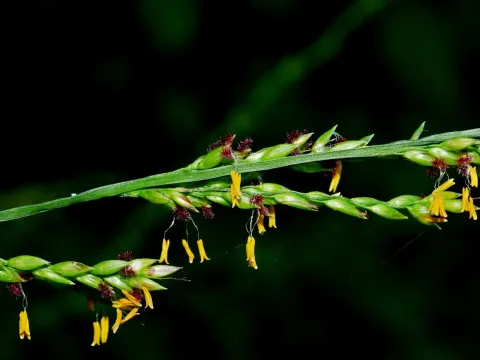
Palm grass
Setaria plicata
Palm grass (Setaria plicata) is a perennial member of the Poaceae family, widely recognized for its wide, pleated leaves that resemble those of young palm trees. This unique morphology makes it a distinguished species within the genus Setaria.
What the section contains
Palm grass
Originating from the tropical and subtropical zones of East and Southeast Asia, this grass is accustomed to the sheltered, humid environments found on forest floors. It thrives best in regions where mild winters allow for steady growth throughout the year.
Optimal growth is achieved in fertile, well-draining soils that remain consistently moist. While it can handle partial shade, it requires protection from harsh, direct sunlight to prevent leaf scorching and excessive moisture loss in dry climates.
Agricultural management includes consistent irrigation and the incorporation of organic matter into the soil to support its high biomass production. In cooler climates, growers often treat it as a tender perennial, moving containers indoors when frost threatens.
The primary use of Palm grass is ornamental gardening, where its dramatic foliage serves as an architectural element. Beyond its aesthetic value, it serves as a forage grass in native tropical regions, providing palatable feed for livestock when managed correctly.
The primary threats to Setaria plicata health include fungal infections triggered by poor air circulation and excessive substrate moisture. Maintaining proper spacing between plants is essential to mitigate these biological risks.
Pests such as spider mites, aphids, and various lepidopteran larvae can impact the plant's health, particularly under stress conditions. Integrated pest management strategies, including the use of neem oil or targeted biological controls, are recommended.
Environmental stress, particularly sudden exposure to freezing temperatures or prolonged drought, can significantly weaken the plant, making it more susceptible to opportunistic pathogens and reducing its overall vigor.
Nutrient deficiencies, particularly lack of nitrogen, often manifest as yellowing of the leaves, which can be corrected through appropriate fertilization schedules and soil pH adjustments to ensure maximum nutrient availability.
To ensure long-term sustainability in cultivation, it is vital to monitor for signs of chlorosis and mechanical damage. Preventing overcrowding prevents the humidity buildup that fosters the development of leaf spot diseases.