
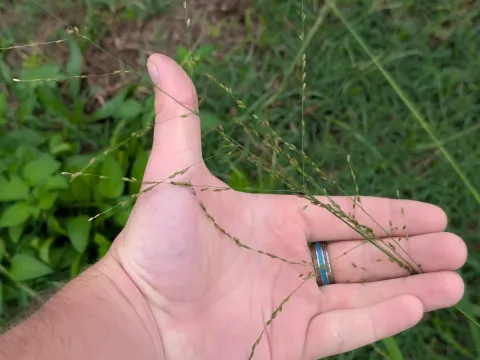
Panicum
Megathyrsus (Pilg.) B. K. Simon & S. W. L. Jacobs
Panicum, also known as Guinea grass, is a warm-season crop that requires high soil temperatures for optimal germination. Planting should only begin once soil temperatures consistently stay above 15-18°C.
What the section contains

Panicum
In temperate climates, the sowing window is usually limited to late spring. Early planting in cold soils often results in poor stand establishment and increased vulnerability to soil-borne pathogens.
Seeds are typically sown at a depth of 1–3 centimeters. Proper seed-to-soil contact is essential for uniform emergence, often achieved through light rolling immediately after seeding.
Seeding rates vary significantly based on the intended use, such as grazing, hay production, or seed harvest. Higher densities are often used for forage to effectively shade out potential weeds.
Pre-treatment of seeds, including sizing and the application of fungicides, is recommended to ensure strong, early growth and to protect the crop during the most vulnerable seedling stages.
As a member of the Poaceae family, Panicum is highly adapted to sunny environments and high temperatures. It thrives in tropical and subtropical conditions, utilizing C4 photosynthesis for rapid biomass production.
The crop prefers well-drained loamy soils with a pH ranging from neutral to slightly acidic. Waterlogging must be avoided, as the root system is highly susceptible to hypoxia under saturated conditions.
Although it exhibits good drought tolerance once established, consistent moisture during the peak vegetative stage is required to achieve maximum yield potential and nutritional quality.
Nitrogen fertilization is a key driver for productivity. Split applications of fertilizer, especially following each cutting, are necessary to sustain growth and ensure high crude protein content in the biomass.
Site selection should prioritize full sun exposure. Shading from trees or structures will significantly reduce tillering and decrease the overall leaf-to-stem ratio of the harvested forage.
Yield potential is largely determined by soil fertility and the frequency of harvest. With proper management and fertilization, Panicum is capable of multiple high-yielding cuts per season.
Producers can typically expect yields ranging from 30 to 60 tonnes of green matter per hectare, depending on local conditions and hybrid selection. Intensive irrigation can further increase these figures.
Timely harvest is critical, as protein levels drop rapidly once the plant begins to transition into the reproductive stage. Managing the harvest schedule is essential to balance yield with forage quality.
In perennial stands, productivity often peaks in the second or third year. Good management practices, including proper cutting height and nutrient replenishment, are required to maintain a healthy stand.
Monitoring growth rates throughout the season allows for strategic fertilization, ensuring that the crop receives the nutrients necessary for quick regrowth after each cutting cycle.
Common pests include aphids and various grass-feeding larvae that can impact stand density. Regular scouting is recommended, with insecticides applied only when infestation levels exceed economic thresholds.
Fungal diseases, such as rust and leaf spot, are prevalent in areas with high humidity and poor airflow. Managing the density of the stand helps mitigate the risks of these infections.
Weed control is essential, particularly during the establishment phase when the crop is less competitive. Integrated weed management, including pre-emergent herbicides and timely cultivation, is recommended.
Crop rotation plays a vital role in preventing the buildup of soil-borne diseases and persistent pests. Avoiding monoculture cycles over long periods is a standard agronomic practice.
Biosecurity measures, such as cleaning equipment between fields, are important to prevent the spread of diseases and invasive weed seeds, which can compromise the long-term viability of the stand.
For fresh forage or silage, the crop should be harvested during the late booting to early flowering stage. This timing captures the highest levels of digestible nutrients before maturity.
Hay production requires cutting at full flower. Drying in the field must be managed carefully, using rakes to turn the crop to ensure even moisture loss while preserving leaf integrity.
A cutting height of 7–10 centimeters is recommended for mechanical harvest. This leaves enough residual tissue for the plant to recover quickly and prevents damage to the crown area.
Seed harvesting requires precision as mature seeds are prone to shattering. Timing the harvest when the panicles reach a golden-brown color is necessary to minimize harvest losses.
Post-harvest processing involves immediate drying to reduce moisture levels to 12–14%. Proper storage in dry, cool conditions ensures seed longevity and maintains germination rates for the following season.