
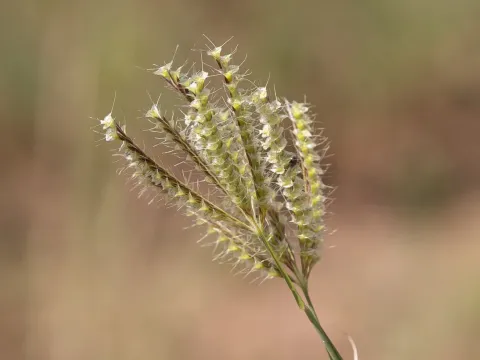
Oxychloris
Oxychloris
Oxychloris (genus Oxychloris) belongs to the Poaceae family and is recognized for its significant resilience in semi-arid environments, making it a valuable subject for agronomic study.
What the section contains

Oxychloris
Sowing procedures are typically timed with the onset of seasonal rains to ensure that the small seeds receive the moisture necessary for germination and early root development.
The seeds should be sown at a shallow depth in a well-prepared seedbed, as small-seeded grasses require close contact with moist soil particles to thrive.
When used in pasture establishment, Oxychloris is often integrated into seed mixtures, helping to create a stable and persistent ground cover that prevents soil erosion.
Optimal spacing and seeding rates depend on the specific site conditions, with higher densities recommended for areas prone to competition from opportunistic weed species.
Oxychloris is highly regarded for its ability to grow in marginal soils, including saline and poor-nutrient grounds where other forage crops often fail to survive.
The species possesses exceptional drought tolerance, a trait that allows it to maintain productivity in climates characterized by erratic rainfall and prolonged dry spells.
Sunlight exposure is a critical factor; the plant performs best in full sun, as shading can significantly limit its biomass production and overall vitality in the field.
The grass is well-suited to various soil types, exhibiting good growth in both sandy and stony soils while tolerating a range of pH levels from acidic to alkaline.
While hardy, the application of nitrogen-based fertilizers during the early growth stages can significantly enhance green biomass accumulation, benefiting livestock productivity.
The yield of Oxychloris is largely influenced by climatic conditions, specifically the distribution of rainfall throughout the growing season, which dictates the rate of regrowth.
As a perennial species, it demonstrates excellent recovery capabilities after grazing or harvesting, allowing for multiple usage cycles within a single annual cycle.
Productivity is maximized under rotational grazing systems, where planned recovery periods prevent overgrazing and allow the grass to replenish root carbohydrate stores.
Biomass production remains stable across different years, provided that the soil structure is protected and the plant is not subjected to severe environmental stress.
Strategic management of harvest intervals ensures that the quality and quantity of the forage are balanced, meeting the nutritional requirements of grazing animals.
Oxychloris is generally resistant to many common pests, though fungal pathogens can occasionally develop in stagnant air conditions or regions with persistent high humidity.
Insect pests, such as aphids or grass-feeding beetles, may cause occasional damage, but mature stands usually show a strong tolerance to such biological stressors.
The primary threat to field longevity is overgrazing, which depletes the plant's reserves and allows invasive weeds to take over the established pasture area.
Effective management involves regular field surveys to detect early signs of pest outbreaks or nutrient deficiencies, allowing for timely and localized intervention.
Maintaining a balanced ecosystem through proper pasture rotation and avoidng soil compaction helps to keep the stands healthy and productive for many years.
For hay production, Oxychloris is ideally harvested at the early heading stage, which ensures a favorable balance of crude protein and digestible fiber for livestock.
Mechanical harvesting using rotary or sickle-bar mowers should be performed at a height that does not damage the crown or the lower nodes essential for regrowth.
Field drying (wilting) should be conducted efficiently to prevent nutrient loss and to ensure that the moisture content is low enough for safe storage in bales.
Grazing management must be adjusted to the seasonal growth rate, with lower stocking rates during the dry season to protect the plant's basal structure from damage.
Storing the harvested forage in cool, dry conditions prevents spoilage and maintains the nutritional value of the hay throughout the winter or dry periods.