
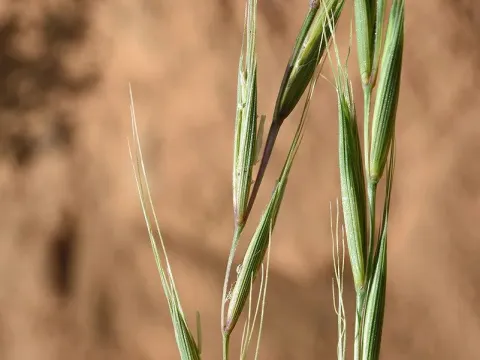
Palermo wheatgrass
Elymus panormitanus
The optimal sowing time for Palermo wheatgrass is in early spring, once the soil has warmed sufficiently to ensure rapid germination of the seeds.
What the section contains
Palermo wheatgrass
Winter sowing is also a viable strategy in certain climates, as it allows seeds to naturally stratify and emerge early once the growing season begins.
A seeding rate of 12–15 kg per hectare is recommended to establish a dense and uniform stand, effectively suppressing weed competition during the early growth stages.
Seeds should be planted at a shallow depth, ideally between 1.5 and 3 cm, to facilitate proper soil-to-seed contact without burying them too deeply.
Using specialized seeding equipment with integrated rollers ensures the soil is firmed around the seeds, preventing moisture loss and promoting reliable field emergence.
Palermo wheatgrass (Elymus panormitanus) belongs to the Poaceae family and is well-adapted to temperate environments, favoring fertile, well-drained soils.
This grass species shows excellent adaptability to various soil types, ranging from sandy loams to heavier clay-based soils, provided there is adequate drainage.
It thrives in moderate climate conditions and exhibits good cold tolerance, making it a reliable choice for pasture development in variable weather zones.
While it prefers full sunlight for maximum biomass production, it also demonstrates a notable ability to grow well in partially shaded or forested areas.
Maintaining soil fertility through balanced fertilization, particularly with nitrogen, is crucial for sustaining high yields and promoting active tillering.
Palermo wheatgrass is primarily utilized as a high-quality forage crop, favored for its nutritional density and palatability for cattle, sheep, and horses.
Under favorable growing conditions and regular moisture, the crop can yield multiple cuts per season, significantly boosting overall forage supply.
Average biomass yields typically range between 20 and 30 tons per hectare, depending on the intensity of management and local environmental factors.
The high leaf-to-stem ratio makes it an excellent source of protein and essential fibers, contributing to improved weight gain and dairy productivity in livestock.
Efficient management of grazing and cutting intervals ensures that the plants remain in a vegetative state, maximizing the intake of nutrient-rich green matter.
The crop is susceptible to common rust diseases when humidity levels are high, especially if the canopy becomes too dense and restricts airflow.
Powdery mildew can occur during periods of fluctuating temperatures, which may temporarily stunt growth if not managed through proper canopy density control.
Pests such as cereal flies and aphids are known to target the vegetative tissues, potentially impacting overall stand health during the spring peak growth period.
Implementing integrated pest management practices, including proper crop rotation and timely harvesting, helps to reduce the prevalence of these common threats.
Monitoring the field for signs of infestation allows for targeted interventions, minimizing the need for extensive chemical applications in forage areas.
Harvesting for high-quality hay should take place at the onset of the heading phase, capturing the plant at its peak nutritional value before fiber levels rise.
Mechanical harvesting with conditioning rollers is highly recommended to improve the drying rate, which preserves the nutritional integrity of the harvested forage.
Seed production requires harvesting when the spikelets have reached maturity and show characteristic browning, indicating proper development of the seeds.
Proper post-harvest drying of seeds to a moisture content of 12–14% is essential to ensure long-term stability and prevent fungal growth during storage.
Maintaining a well-planned harvest schedule not only maximizes immediate forage quality but also supports the long-term vigor and sustainability of the stand.