
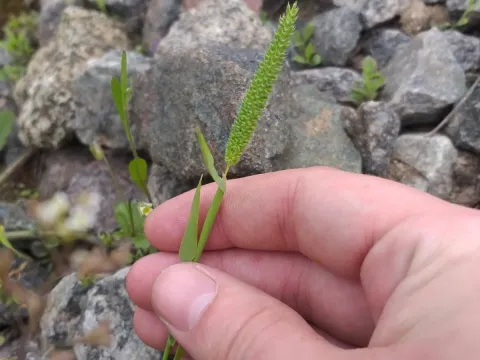
Paniculate timothy
Phleum paniculatum
Paniculate timothy (Phleum paniculatum) is a perennial grass belonging to the Poaceae family, widely recognized for its high forage value. Successful cultivation starts with preparing a fine, firm seedbed, as the seeds are quite small and require excellent soil contact for uniform germination.
What the section contains
Paniculate timothy
The optimal sowing time is early spring, allowing the plants to establish before the onset of summer heat. Late summer sowing is also effective in regions with mild winters, as the seedlings can root well before entering dormancy during the cold season.
Seeds should be planted at a shallow depth of approximately 1 to 2 centimeters. Deep planting often leads to poor emergence because the small seedlings lack the energy reserves to reach the soil surface from greater depths. Rolling the soil after sowing is essential for ensuring good contact.
The seeding rate typically ranges from 10 to 15 kilograms per hectare, depending on seed quality and the sowing method. Row spacing should be kept narrow to prevent weed infestation during the early growth stages, as the plant develops rather slowly in the first year.
Integrating this grass with companion legumes is a common practice to enhance the nutritional balance of the pasture. Ensuring the field is free of perennial weeds before seeding is vital for creating a long-lasting and productive forage stand.
Paniculate timothy thrives best in cool, moist, and fertile soils, particularly loams or clay-loams with good drainage. While it tolerates a variety of soil types, it performs poorly in extremely sandy or waterlogged environments, which can damage its root system.
The plant is well-adapted to temperate climates, exhibiting good winter hardiness. It prefers a soil pH in the neutral range; acidic soils may require liming to optimize nutrient availability, especially for nitrogen and phosphorus absorption during the growth phase.
Light intensity is crucial for the development of vegetative mass. Since the species is light-loving, planting it in open, sunny areas is necessary to achieve high yields. Shading from trees or taller crops can significantly reduce both biomass production and plant vitality.
Adequate water supply is essential during the vegetative development phase. Although the plant is moderately drought-tolerant once established, continuous moisture is required to produce multiple cuts of high-quality hay throughout the growing season.
Fertilization with nitrogen is effective for promoting foliage growth, whereas potassium and phosphorus are necessary for maintaining root strength and overall stand longevity. Soil testing is recommended to ensure that the nutrient levels meet the crop's physiological needs.
The primary use of Phleum paniculatum is for forage production, including hay and grazing pasture. Its foliage is highly palatable and rich in proteins and soluble carbohydrates, making it an excellent feed source for cattle, sheep, and horses.
When managed properly, the crop provides multiple harvests per season. High productivity is achieved by rotating grazing schedules or timing the hay cuts according to the growth cycle, ensuring that plants have time to recover between harvests.
This grass also contributes significantly to soil conservation. Its deep and fibrous root system helps to stabilize the soil surface, preventing erosion in hilly areas and maintaining soil structure, which is beneficial for long-term land management.
The hay produced is valued for its nutritional stability and ease of storage. Properly cured hay retains its nutrients, providing essential winter feed for livestock. If harvested at the right time, it maintains its quality even after being compressed into bales.
Seed production requires specific conditions, including proper pollination and favorable weather during the grain-filling stage. Growers interested in seed production should maintain high standards of crop purity to maximize market value and germination rates.
Phleum paniculatum is susceptible to various fungal diseases, with rust and powdery mildew being the most common. These infections thrive in humid conditions and can reduce the yield and nutritional value of the harvested biomass if not managed early.
Leaf spots caused by different pathogens can impair photosynthesis, leading to reduced overall growth. Preventive measures, such as selecting resistant varieties and avoiding overly dense plantings, are essential to keep the crop healthy throughout the season.
Insects like grass flies and aphids can cause direct damage by feeding on stems or transmitting viral diseases. Integrated pest management, which includes biological control methods and careful chemical use when necessary, helps protect the crop from severe infestations.
Poor management of grazing intensity can also pose a threat. Overgrazing weakens the roots and exposes the soil, allowing opportunistic weeds to outcompete the timothy, eventually thinning out the stand and reducing the long-term yield potential.
Maintaining a clean field environment by removing crop residues and ensuring a balanced nutrient program makes the grass more resilient. A vigorous crop is naturally better at suppressing diseases and surviving minor insect attacks compared to stressed plants.
The optimal harvest timing for high-quality hay is at the beginning of the flowering stage. At this moment, the concentration of proteins and total digestible nutrients is at its peak, providing the best possible nutrition for livestock.
Mechanical harvesting should be carried out during dry weather. Using mower-conditioners speeds up the wilting process, which is critical for retaining the green color and nutritional components of the plant by minimizing the time spent exposed to sun and moisture.
Once the hay has reached the desired moisture level (usually 15-17%), it should be baled and moved to a dry, ventilated storage area. Storing hay properly prevents the development of mold, which could be harmful if ingested by animals.
For pastures, rotational grazing is recommended to ensure that the plants are not grazed down to the point of root damage. Allowing the timothy to rest after grazing is essential for it to regrow and maintain its competitive advantage in the meadow.
End-of-season management involves assessing the stand's density and potentially applying a final nutrient boost. This prepares the plants for the winter dormancy period, helping them store carbohydrates in their root crowns for a quick start in the next spring.