
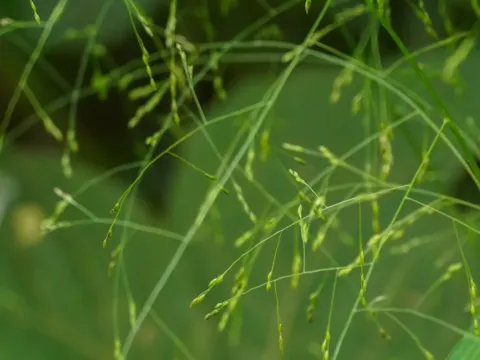
Black-nerved millet
Panicum bisulcatum
Black-nerved millet is a warm-season grass that requires stable soil temperatures above 12–15 degrees Celsius for successful germination.
What the section contains
Black-nerved millet
Sowing should ideally occur in late spring once the risk of frost has completely passed, ensuring a favorable environment for early seedling development.
The seeds are typically sown in rows at a shallow depth of 2 to 4 centimeters to ensure adequate soil moisture and contact for uniform emergence.
Adjusting the seeding rate is essential depending on whether the primary goal is to produce biomass for fodder or to harvest mature seeds.
Field preparation should involve fine seedbed creation to facilitate quick rooting and ensure the seedlings establish themselves against potential weed competition.
This species thrives in sunny, open locations as it is highly dependent on light intensity for robust growth and optimal photosynthetic efficiency.
The crop prefers well-drained loamy or sandy soil types with a neutral pH, as it is sensitive to waterlogging which can damage its root system.
While relatively drought-tolerant once established, it benefits from supplemental moisture during the critical phases of active vegetative growth.
Adequate nutrient management, focusing on nitrogen and phosphorus, is crucial for promoting vigorous tillering and overall crop health during the season.
Maintaining proper soil aeration is vital, as compacted soils often lead to restricted root expansion and decreased plant development rates.
The biomass yield of Black-nerved millet is highly correlated with effective soil fertility management and the timing of agronomic interventions.
Regular monitoring of field conditions allows farmers to optimize fertilization schedules, directly impacting the final volume of harvestable material.
In optimal climatic conditions, the crop is capable of producing significant forage yields, making it a valuable asset in integrated farming systems.
Seed yield, however, requires careful timing during the ripening phase to prevent natural shattering of the grains, which is a common trait of the genus.
Overall productivity is further enhanced by selecting high-quality seeds and ensuring the field remains free from excessive weed pressure throughout the year.
Common agricultural threats include various fungal pathogens that can proliferate in humid and poorly ventilated crop environments, causing foliage blight.
Pest pressures, such as aphid infestations or cereal flies, can occasionally affect the growth vigor and should be managed with timely intervention.
Integrated pest management strategies are recommended, utilizing both cultural practices and selective treatments to minimize the impact of biological stressors.
Preventive measures such as crop rotation and the use of certified, treated seeds are essential to break the life cycles of soil-borne diseases.
Regular field scouting helps detect early signs of infestation or disease, allowing for targeted measures that reduce the need for widespread chemical application.
The harvest timing for grain depends on reaching physiological maturity, characterized by a specific moisture content and grain hardening in the inflorescences.
Direct combine harvesting is the standard practice, provided that the field displays sufficient uniformity in maturation to reduce mechanical loss.
For scenarios where uneven ripening occurs, swathing the crop into windrows before threshing can ensure a consistent drying process for the plant material.
Post-harvest conditioning includes cleaning the seeds of debris and adjusting moisture levels for safe, long-term storage in well-ventilated granaries.
When harvesting for green fodder, the process should be timed during the boot stage to maximize the nutritional profile of the harvested plant tissue.