
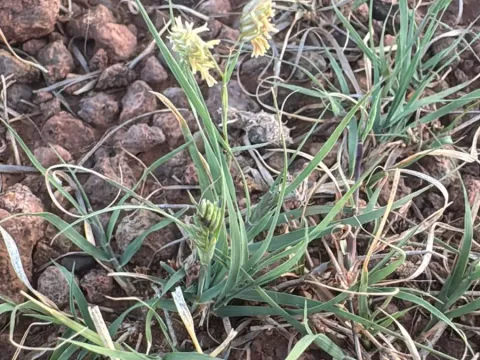
Blue grama
Bouteloua dactyloides
Blue grama, scientifically known as Bouteloua dactyloides, is a perennial grass belonging to the Poaceae family, widely recognized for its resilience in arid conditions.
What the section contains
Blue grama
Sowing typically takes place in the spring when soil temperatures reach at least 15-20 degrees Celsius, ensuring favorable conditions for germination.
It is crucial to sow seeds at a shallow depth of 1 to 2 centimeters because the seeds are small and have limited energy to emerge from deeper soil layers.
Using a drill seeder followed by a light roller is the most effective method to ensure the seeds maintain good contact with the soil for better water absorption.
A typical seeding rate ranges from 5 to 10 kilograms per hectare, depending on the desired density and local environmental soil characteristics.
This grass is legendary for its extreme drought tolerance, thriving in regions where other forage species would simply fail due to lack of moisture.
Blue grama performs best in well-drained soils, including heavy clays and rocky loams, and is well-adapted to neutral or slightly alkaline conditions.
Full sun is essential for the growth of this plant; it does not tolerate shade and will quickly decline if placed under canopy or near dense structures.
It displays remarkable temperature adaptability, surviving both the searing heat of summer and the sub-zero temperatures of harsh winters without damage.
While it can survive in nutrient-poor soils, a light application of fertilizer during the active growing phase can significantly improve biomass production.
While the yield of blue grama is lower than that of lush lowland grasses, its nutritional quality remains high, making it a preferred choice for livestock forage.
The plant spreads via stolons, forming a thick, dense mat that provides consistent ground cover and protects the soil from wind and water erosion.
In managed pasture systems, it provides reliable biomass that remains palatable and nutritious even after the plant has reached maturity.
Dry matter yields can reach 20 to 30 quintals per hectare under optimal conditions, which is quite productive for a grass species adapted to water-stressed environments.
The high protein content in the foliage during the summer months contributes to excellent weight gain in grazing cattle and sheep.
Blue grama is highly resistant to most common agricultural diseases, largely due to its evolutionary adaptation to harsh and dry climates.
Some fungal issues, such as rust, may occur during unusually wet or stagnant seasons, but these rarely reach epidemic proportions in managed stands.
Pest pressure is generally minimal, as the tough leaf structure and low moisture profile are less attractive to many typical grass-feeding insects.
The primary concern for young seedlings is weed competition, which requires vigilant control during the establishment year to ensure the stand survives.
Effective management includes maintaining a healthy root system, which helps the plant naturally suppress invasive species over time.
Harvesting for hay should be timed for the late boot or early heading stage to capture the best balance between biomass quantity and protein quality.
When grazing, rotational strategies are recommended to allow the plant sufficient recovery time, ensuring the root system remains strong for the next cycle.
Cutting heights should remain above 5 centimeters to preserve the crown and allow the plant to resprout vigorously after the harvest.
Seed harvesting is technically demanding due to the erratic ripening of seeds, requiring specialized equipment to prevent loss during collection.
After the harvest, leaving a small amount of residue helps insulate the soil and provides seeds for natural reseeding of the pasture field.