
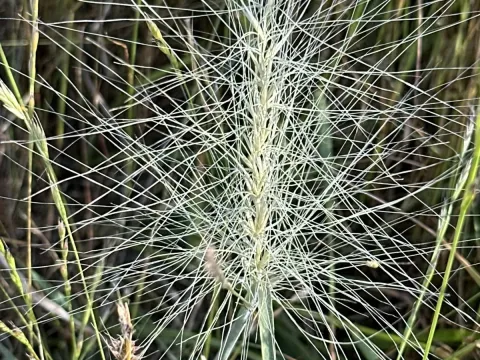
Big-bristle wheatgrass
Elymus multisetus
Sowing of Elymus multisetus is ideally timed for early spring, allowing the seeds to capitalize on soil moisture levels following winter to ensure rapid germination.
What the section contains
Big-bristle wheatgrass
Drilling the seeds at a depth of 2 to 4 centimeters is recommended to protect the embryo from desiccation while ensuring adequate access to soil nutrients.
Fall seeding is also a viable practice in specific climates, taking advantage of cool temperatures and autumn rains to establish roots before the winter dormancy.
A seeding rate of 10 to 15 kilograms per hectare is standard for establishing a solid stand intended for grazing or hay production purposes.
Post-seeding compaction using a roller is crucial to improve seed-to-soil contact, which significantly increases the uniformity and density of the emerging stand.
Elymus multisetus belongs to the Poaceae family and is recognized for its exceptional durability in challenging environmental conditions across its native range.
The plant thrives in well-drained soils and exhibits high adaptability to rocky or nutrient-poor sites where common agricultural crops often fail to grow.
It displays remarkable drought tolerance, making it an excellent choice for reclamation of degraded lands and erosion control on arid hillslopes.
While the species is hardy and withstands extreme winter temperatures, it performs best when exposed to full sunlight, avoiding heavy competition from canopy crops.
Optimal growth is observed in neutral to slightly alkaline soil types, where the deep root system can effectively tap into subsurface moisture reserves.
Common agricultural threats include fungal pathogens such as rust and powdery mildew, which tend to proliferate during seasons with high humidity and stagnant air.
Pests such as aphids and various species of mites may impact young seedlings, potentially reducing the overall vigour and yield of the grass stand.
Integrated pest management strategies, including regular field monitoring and balanced fertilization, are essential to maintain crop health and resistance.
Cultural practices such as mowing at the right height and avoiding overgrazing help maintain a robust plant population that is less susceptible to infestations.
Seed certification and cleaning are vital steps to ensure that pathogens are not introduced into new fields via contaminated sowing material.
Harvesting for high-quality hay should be conducted during the boot or early heading stage to capture the peak protein content before stems become too lignified.
In grazing scenarios, a rotational stocking system is advised to allow the grass sufficient rest periods for regrowth and to maintain long-term pasture productivity.
Seed harvest requires careful timing, typically when the seed heads show signs of maturity and moisture levels have dropped to ensure stable storage.
Efficient hay curing processes, such as proper tedding and baling, are necessary to preserve the nutritional value and prevent microbial spoilage during storage.
Following a productive harvest cycle, supplemental fertilization can help rejuvenate the stand and promote healthy regrowth for subsequent growing seasons.