
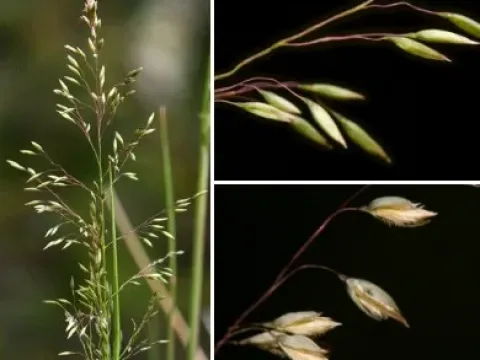
Blepharoneuron
Blepharoneuron
Blepharoneuron, particularly the species Blepharoneuron tricholepis, is a perennial bunchgrass adapted to arid and mountain environments.
What the section contains

Blepharoneuron
For agricultural propagation, seeds should be sown in the early spring, ensuring the soil temperature has stabilized between 10 and 15 degrees Celsius.
The seeds require pre-sowing treatments, such as cold stratification, to break dormancy and ensure uniform germination across the field.
Given the small size of the seeds, they should be sown at a shallow depth of no more than 1–2 centimeters to allow for efficient seedling emergence.
Row planting with adequate spacing is highly recommended to promote vigorous root development and reduce competition for nutrients in the establishment phase.
As a member of the Poaceae family, Blepharoneuron thrives in open, sun-exposed locations with excellent drainage capabilities.
The plant demonstrates remarkable tolerance to drought, making it an excellent choice for reclamation of degraded or rocky, arid lands.
Proper soil aeration is crucial for this species, as it is highly sensitive to waterlogged conditions, which can inhibit growth and promote root rot.
Blepharoneuron is well-adapted to high-altitude environments characterized by significant diurnal temperature variations and cool climates.
It prefers sandy or loamy soils with a neutral pH, although it shows versatility in surviving in various soil types provided there is no standing water.
The primary agricultural utility of Blepharoneuron is its value as a forage grass, providing nutritious grazing for both wild and domestic livestock.
Total biomass yields are modest compared to intensively managed forage crops, but the grass is highly valued for its consistency in harsh environments.
The yield quality remains high throughout the early growing season, offering a reliable nutrient source for grazing animals in semi-arid regions.
Beyond its feed value, the grass acts as an effective soil stabilizer, reducing wind and water erosion on vulnerable sloping agricultural land.
In mixed pasture systems, it serves as a robust component that balances the nutritional profile of the grassland during the summer months.
Fungal diseases related to high humidity and poor circulation represent the primary threat to the health and productivity of these grass stands.
Various insect pests, including aphids and thrips, can cause significant damage during hot and dry spells, requiring careful monitoring of the field.
Weed interference is most problematic during the early seedling stage, often requiring mechanical cultivation to ensure the young grass establishes successfully.
Overgrazing is a major threat to long-term sustainability, as excessive trampling can degrade the bunchgrass structure and reduce recovery speed.
Effective management includes implementing a rotational grazing schedule to allow the plants to recover their energy reserves after heavy use.
Harvesting for forage should be conducted during the heading stage to capture the plant at its peak nutritional value and protein content.
If producing hay, it is essential to cure the cut grass rapidly in the field to retain the leaves, which hold the majority of the nutrients.
Mechanical harvesting equipment must be set to an appropriate cutting height to avoid injuring the base of the plant, which is vital for regrowth.
Seed harvesting should be planned based on visual maturity checks, as moisture fluctuations can cause uneven ripening in natural stands.
Properly stored forage must be kept in cool, dry conditions to ensure that quality remains intact and to prevent the development of mold or fire risks.