
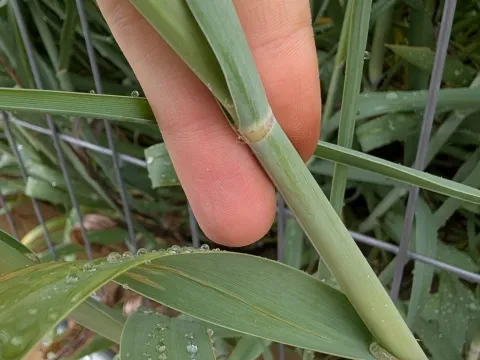
Bitter panicgrass
Panicum amarum
Bitter panicgrass (Panicum amarum) is typically sown during the spring months once the soil temperature is sufficiently warm to support germination.
What the section contains
Bitter panicgrass
The seeds should be planted at a shallow depth, ideally between 2 and 3 centimeters, to facilitate optimal emergence through the soil surface.
When used for ecological restoration, planting rooted stems or rhizome cuttings is often more effective than seeding for establishing stable vegetation.
Standard mechanical seed drills can be utilized for large-scale planting, provided they are calibrated for small grass seeds.
Preparation of the seedbed is critical; removing invasive vegetation and ensuring loose soil structure provides the best start for this perennial grass.
Belonging to the Poaceae family, bitter panicgrass is a robust perennial species naturally found in coastal dune environments.
The plant is highly tolerant of saline conditions, making it an ideal candidate for soil stabilization in seaside environments.
It thrives in sandy, well-drained soils and is sensitive to waterlogged conditions, requiring excellent drainage for healthy root development.
Bitter panicgrass is exceptionally drought-tolerant, possessing deep roots that allow it to access moisture even in arid sand conditions.
As a light-demanding plant, it requires full sun exposure and does not perform well in shaded or semi-shaded areas.
Bitter panicgrass exhibits a strong natural resistance to many common agricultural diseases, partly due to its evolved survival strategies.
While generally hardy, seedlings can be susceptible to damage from soil-dwelling insects such as white grubs or wireworms in certain areas.
Over-fertilization can inadvertently promote fungal infections, therefore a balanced approach to soil nutrients is highly recommended.
The plant is rarely attacked by typical grain pests, which reduces the need for chemical pesticide intervention in established stands.
Monitoring for signs of pest pressure and maintaining proper spacing between plants helps to minimize potential disease spread.
The primary purpose of growing bitter panicgrass is not for grain production but rather for its structural value in environmental protection.
In cases where the grass is utilized for forage, it must be harvested during the vegetative stage before stems become lignified and tough.
Harvesting for seed involves collecting the panicles once they turn straw-colored and before they shatter and disperse naturally.
Once collected, seeds should be dried promptly in a cool, ventilated area to ensure long-term viability and prevent mold growth.
Management of the plant stands generally involves periodic maintenance rather than annual harvesting, supporting long-term land stability.