
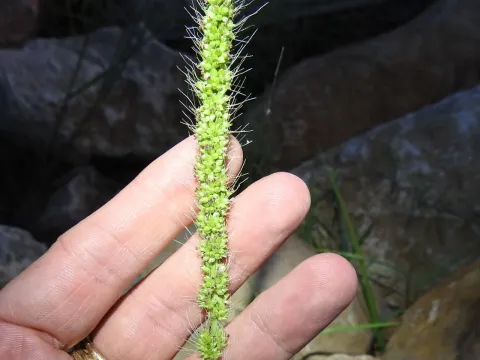
Big-spike bristlegrass
Setaria macrostachya
Big-spike bristlegrass (Setaria macrostachya) is a perennial grass species that requires specific sowing conditions to establish a productive and healthy stand.
What the section contains
Big-spike bristlegrass
The optimal time for sowing is during the spring season, once the soil has warmed up sufficiently to support seed germination, typically occurring after the danger of frost.
Seeds should be planted at a shallow depth of approximately 1 to 2 centimeters, ensuring that the soil is firm and provides adequate seed-to-soil contact.
Using a drill seeder with narrow row spacing is recommended to prevent excessive competition from weeds and to promote uniform growth across the field.
Adequate moisture at the time of planting is critical, as it ensures rapid germination and establishment before the onset of drier summer weather patterns.
This species is highly regarded for its adaptation to arid and semi-arid environments, demonstrating superior drought tolerance compared to many other forage grasses.
It prefers well-drained, fertile soils with a neutral pH level, though it can survive in a variety of soil types ranging from sandy loams to heavier clays.
The plant thrives in full sunlight and does not tolerate prolonged shade or areas where water accumulates, as it is susceptible to root rot in saturated conditions.
Soil nutrient management is important, with phosphorus and nitrogen applications often being beneficial during the early stages of spring growth.
Consistent climatic conditions with distinct seasonal cycles allow the plant to enter dormancy during winter months and resume vigorous growth in the spring.
The primary agricultural use of Setaria macrostachya is as a source of forage, providing high-quality hay or grazing material for various types of livestock.
Yield capacity is largely determined by the management practices applied, including the timing of harvests and the frequency of soil moisture availability.
When managed properly through rotational grazing, the plant can provide multiple harvests throughout the growing season, maximizing overall pasture productivity.
The forage quality is peak at the early flowering stage, offering a good balance of crude protein and digestible fiber for cattle and sheep consumption.
Proper harvesting techniques ensure that the stand remains healthy and productive for many years, as the plant is known for its impressive longevity in stable conditions.
While robust, the crop can be prone to specific rust diseases, especially in seasons characterized by high humidity and poor air circulation within the canopy.
Various insect pests, including stem-boring insects and aphids, can cause significant damage if populations are not managed through proactive monitoring.
Implementing a diverse crop rotation strategy and maintaining field hygiene are the best methods to limit the buildup of pathogen pressure within the soil.
In cases of heavy infestation, specific integrated pest management practices should be employed to protect the integrity of the foliage and overall yield quality.
Keeping the crop vigorous through proper fertilization and avoiding stress factors generally strengthens the plant's natural resistance to these common biological threats.
Harvesting for hay production should be timed precisely with the plant's phenological stage, ideally targeting the beginning of the blooming period.
Cutting too late in the season will result in a significant drop in forage quality due to the increased accumulation of lignin and stems.
Modern harvesting equipment, such as disc mowers and balers, is standard for efficient collection and storage of the grass, preserving its nutritional value.
Leaving a sufficient stubble height during mowing is essential for the plant to store energy reserves in its crown, which is vital for post-harvest regrowth.
Effective drying and storage conditions are required post-harvest to prevent mold development and ensure the feed remains palatable for winter supplemental feeding.