
Blepharidachne
Blepharidachne
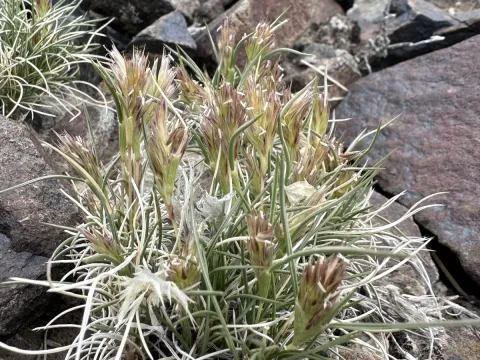
Blepharidachne is a genus of perennial grasses belonging to the Poaceae family. These plants are characterized by their compact growth habit, often forming dense tufts that help them survive in some of the most arid environments in the Americas.
What the section contains

Blepharidachne
The genus is primarily distributed throughout desert and semi-desert regions. It thrives in soils that are generally low in organic matter, such as rocky or sandy substrates, where it has evolved to utilize scarce moisture efficiently after limited rainfall events.
Botanically, Blepharidachne species are highly specialized. Their leaves are often narrow, stiff, and pubescent, which serves to reduce water loss via transpiration. The root systems are robust and designed to anchor the plant firmly against wind erosion.
Regarding cultivation requirements, this grass demands excellent drainage and maximum solar exposure. It is highly sensitive to soil compaction and waterlogging, making it unsuitable for standard agricultural land without significant modification of soil structure.
The potential хозяйственное (agricultural) utility lies in land reclamation projects. By stabilizing loose soils in arid zones, these grasses can help prevent further environmental degradation in vulnerable landscapes where other crops fail to establish.
The most significant threat to Blepharidachne is overgrazing by livestock. Because the plants grow slowly and in harsh conditions, they cannot recover quickly from intense biomass removal, leading to localized extinction.
Common threats also include insect pests, particularly orthopterans that can decimate foliage. Fungal pathogens are less common but can impact the plants during unseasonably wet years, potentially causing crown rot if the root zone remains saturated for too long.