
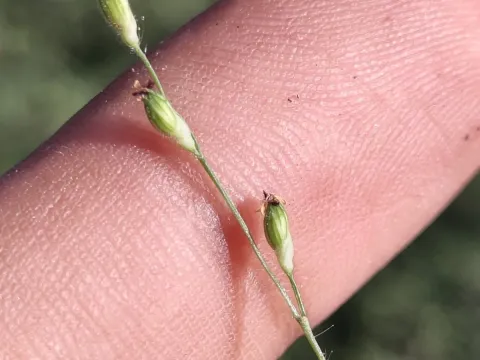
Arizona panicgrass
Panicum arizonicum
Arizona panicgrass is a warm-season grass that thrives when soil temperatures consistently reach at least 15–18°C, usually in late spring or early summer.
What the section contains
Arizona panicgrass
The seeds require a firm, moist seedbed to ensure adequate germination, and sowing depth should be maintained between 1 and 2 centimeters for optimal results.
In natural habitats, germination is typically triggered by the onset of seasonal monsoon rains, which provides the necessary moisture for early root development.
For agricultural purposes, precision seeding equipment is recommended to maintain uniform spacing and reduce competition among young seedlings for nutrients.
Adequate soil preparation is crucial; eliminating existing weeds before sowing is the best strategy to ensure the establishment of a healthy crop stand.
As a member of the Poaceae family, Panicum arizonicum is exceptionally well-adapted to the arid and semi-arid environments of the southwestern United States.
This grass species prefers well-drained, sandy or gravelly soils and can tolerate areas with low fertility that might be unsuitable for more demanding crops.
It exhibits remarkable heat tolerance and can survive extended droughts, maintaining its vegetative cover when other forage plants might wither.
Full sun exposure is mandatory for this species, as shading significantly restricts growth and reduces the overall yield of the green biomass.
While the plant is hardy, providing supplemental irrigation during the peak growing season can significantly boost its biomass production for livestock forage.
Fungal diseases, particularly rusts and various leaf spots, can affect the plant's health, especially during periods of uncharacteristic humidity or poor air circulation.
Root and crown rots are potential threats if the crop is planted in heavy soils where water drainage is poor and oxygen levels in the rhizosphere are low.
Insect pests, including various aphids and grass-feeding beetles, may cause economic damage by feeding on stems or developing seed heads during the season.
Integrated pest management, including regular monitoring and the use of resistant varieties where available, is the preferred method for maintaining field health.
Crop rotation practices should be utilized to prevent the build-up of soil-borne pathogens that thrive in the root zones of grass species.
Harvesting for green chop should occur before the plant reaches full anthesis to maximize the nutritional value, specifically protein and sugar content.
For hay production, cutting at the boot stage ensures that the nutritional quality is high while the fibers remain soft enough for animal digestion.
Seed harvesting requires careful timing; the seed heads should be harvested once the majority of the seeds are mature to prevent excessive shattering losses.
Modern harvesting machinery should be calibrated specifically for small-seeded grains to ensure efficient separation of the seed from the chaff.
Post-harvest drying is an essential step; moisture levels must be reduced to approximately 14% to ensure the longevity of the seeds during storage.