
Armoric fescue
Festuca armoricana
Description
Sowing dates
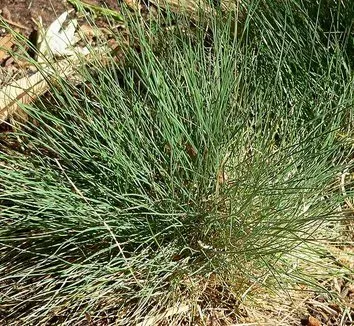
Armoric fescue (Festuca armoricana) is a perennial grass species belonging to the Poaceae family. It is recognized for its dense, tufted growth habit and its ability to thrive in challenging environments.
The optimal sowing time is early spring, which allows the seedlings to establish a strong root system while soil moisture levels are high. This is critical for survival during the summer months.
Late summer sowing is an alternative strategy, provided that rainfall is sufficient to support germination before the onset of winter dormancy.
For uniform stand establishment, seeds should be sown at a depth of 1–2 cm. Broadcasting is possible, but mechanical drilling ensures more consistent plant density per square meter.
The plant demonstrates vigorous initial growth when provided with a well-prepared seedbed, free of competitive weeds and debris.
Growing requirements
This species is highly adapted to well-drained, sandy, or stony soils where other species might struggle due to low nutrient availability.
One of the primary advantages of Armoric fescue is its exceptional drought tolerance. The plant possesses a robust root system capable of accessing water deep within the soil profile.
It prefers neutral to slightly acidic soil conditions. It is essential to avoid sites with poor drainage, as waterlogging is the most common cause of stand failure.
The grass is heliophilous, meaning it requires full sunlight to maintain its dense growth habit and typical blue-green coloration of the leaves.
In terms of management, the species requires minimal fertilization, as it is efficient at extracting nutrients from marginal soils.
Main diseases and pests
Armoric fescue is susceptible to fungal pathogens such as rust and Fusarium, especially in areas with high humidity and stagnant air circulation.
Root rot remains a major threat in fields where soil saturation is high, leading to weakened plant health and reduced biomass production.
Pests such as aphids can cause damage during dry spells, sucking sap from the leaves and potentially introducing viral infections into the stand.
Regular maintenance, including proper mowing and debris removal, helps minimize the accumulation of dead plant matter that could host these pathogens.
Integrated pest management, including monitoring and biological control, is recommended for long-term production and maintenance of the pasture or turf.