
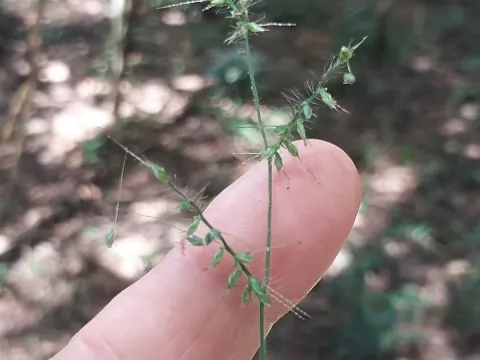
Bristle basketgrass
Oplismenus setarius
Bristle basketgrass (Oplismenus setarius) is a perennial grass species belonging to the Poaceae family. It is naturally distributed across tropical and subtropical regions, predominantly in the Americas, where it thrives in shaded and humid environments.
What the section contains
Bristle basketgrass
The plant is characterized by its trailing stems that readily root at the nodes, forming dense ground cover. The leaves are typically lanceolate and feature a fine, bristly texture, which gives the plant its common and scientific names.
Regarding climate, Oplismenus setarius requires high, consistent temperatures and humidity to thrive. It is not cold-hardy, and in temperate climates, it is typically managed as an indoor ornamental or greenhouse crop rather than a traditional field crop.
Soil requirements are relatively specific: it prefers well-drained, nutrient-rich substrates. A balance of organic matter is essential for maintaining the moisture levels the plant needs while preventing waterlogging, which can be fatal to the roots.
In terms of agricultural use, while primarily utilized as an ornamental ground cover, its resilience in shaded conditions makes it a subject of interest for specialized landscape and ecological restoration projects in tropical zones.
Common pests affecting this species include spider mites and mealybugs, especially in indoor environments where air circulation is limited. Early detection through regular leaf inspections is critical to preventing infestations.
Fungal diseases, such as root rot, are usually the result of overwatering or inadequate soil drainage. Maintaining a proper irrigation schedule is the most effective preventative measure against these pathogens.
Leaf spot diseases may occur under conditions of high humidity combined with poor airflow. Removing affected foliage helps to isolate the infection and prevents its spread to healthy parts of the plant.
Nutrient deficiencies or improper soil pH levels can lead to chlorosis, manifesting as yellowing leaves. Routine soil testing and the application of balanced fertilizers are recommended to ensure optimal plant vigor.
Integrated pest management strategies should prioritize biological controls before resorting to chemical interventions. Maintaining optimal growing conditions remains the strongest defense against typical plant stresses.