
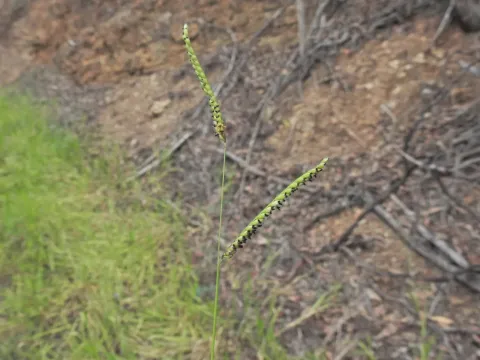
Brachiaria
Brachiaria
Sowing of Brachiaria is best performed at the beginning of the rainy season when soil temperatures are consistently between 20°C and 25°C. Rapid germination is essential to establish a vigorous root system before the dry spell occurs.
What the section contains
 Black-footed signalgrass
Brachiaria nigropedata
Black-footed signalgrass
Brachiaria nigropedata
 Brachiaria adspersa
Brachiaria advena
Brachiaria advena
Brachiaria adspersa
Brachiaria adspersa
Brachiaria advena
Brachiaria advena
 Brachiaria argentea
Brachiaria argentea
Brachiaria argentea
 Brachiaria bemarivensis
Brachiaria bemarivensis
Brachiaria bemarivensis
 Brachiaria ciliatissima
Brachiaria comata
Brachiaria comata
Brachiaria distachyoides
Brachiaria distachyoides
Brachiaria distichophylla
Brachiaria distichophylla
Brachiaria dura
Brachiaria dura
Brachiaria ciliatissima
Brachiaria ciliatissima
Brachiaria comata
Brachiaria comata
Brachiaria distachyoides
Brachiaria distachyoides
Brachiaria distichophylla
Brachiaria distichophylla
Brachiaria dura
Brachiaria dura
 Brachiaria eruciformis
Brachiaria foliosa
Brachiaria foliosa
Brachiaria grossa
Brachiaria grossa
Brachiaria jubata
Brachiaria jubata
Brachiaria eruciformis
Brachiaria eruciformis
Brachiaria foliosa
Brachiaria foliosa
Brachiaria grossa
Brachiaria grossa
Brachiaria jubata
Brachiaria jubata
 Brachiaria lata
Brachiaria marlothii
Brachiaria marlothii
Brachiaria miliiformis
Brachiaria miliiformis
Brachiaria mollis
Brachiaria mollis
Brachiaria notochthona
Brachiaria notochthona
Brachiaria obtusiflora
Brachiaria obtusiflora
Brachiaria lata
Brachiaria lata
Brachiaria marlothii
Brachiaria marlothii
Brachiaria miliiformis
Brachiaria miliiformis
Brachiaria mollis
Brachiaria mollis
Brachiaria notochthona
Brachiaria notochthona
Brachiaria obtusiflora
Brachiaria obtusiflora
 Brachiaria piligera
Brachiaria piligera
Brachiaria piligera
 Brachiaria pubigera
Brachiaria pubigera
Brachiaria pubigera
 Brachiaria serrata
Brachiaria serrifolia
Brachiaria serrifolia
Brachiaria stigmatisata
Brachiaria stigmatisata
Brachiaria subrostrata
Brachiaria subrostrata
Brachiaria serrata
Brachiaria serrata
Brachiaria serrifolia
Brachiaria serrifolia
Brachiaria stigmatisata
Brachiaria stigmatisata
Brachiaria subrostrata
Brachiaria subrostrata
 Brachiaria umbellata
Brachiaria venezuelae
Brachiaria venezuelae
Brachiaria vittata
Brachiaria vittata
Brachiaria umbellata
Brachiaria umbellata
Brachiaria venezuelae
Brachiaria venezuelae
Brachiaria vittata
Brachiaria vittata
 Brachiaria xantholeuca
Brachiaria xantholeuca
Brachiaria xantholeuca
 Broadleaf signalgrass
Brachiaria platyphylla
Dwarf brachiaria
Brachiaria nana
Broadleaf signalgrass
Brachiaria platyphylla
Dwarf brachiaria
Brachiaria nana
 Tropical signalgrass
Brachiaria plantaginea
Tropical signalgrass
Brachiaria plantaginea
Brachiaria
The seeds should be sown at a shallow depth of 1–2 centimeters. Using a drill or manual broadcasting followed by light harrowing ensures proper soil-to-seed contact, which is vital for the germination of these small-sized seeds.
Seeding rates typically range from 4 to 8 kg per hectare depending on the specific species and the method of sowing. Selecting high-quality, treated seeds with high viability is crucial to achieving a uniform pasture stand.
Starter fertilizers, particularly those rich in phosphorus, significantly boost the early establishment phase. They help the grass seedlings thrive even in soils that are naturally low in fertility.
Weed management during the first six weeks is essential. Since Brachiaria establishes slowly in its juvenile stage, it requires protection from aggressive broadleaf weeds that compete for light and nutrients.
Brachiaria is a genus of perennial grasses belonging to the Poaceae family. Native to tropical regions of Africa, these grasses have become the cornerstone of livestock grazing systems in tropical America and Asia.
The crop thrives in well-drained soils but is highly valued for its ability to tolerate acidic and low-fertility soils. Certain varieties are even adaptable to waterlogged conditions, making them very versatile for diverse terrains.
These grasses require high levels of solar radiation for optimal photosynthetic performance. Temperature is a key growth factor, with productivity dropping significantly if the air temperature falls below 18°C.
Brachiaria is highly effective in rehabilitating degraded lands. Its deep and expansive root systems improve soil structure and prevent erosion, which is common in overgrazed or misused tropical environments.
Maintaining balanced soil nutrition, specifically Nitrogen, Potassium, and Phosphorus, allows Brachiaria to reach its full production potential and maintain long-term stand longevity.
Annual green mass yields of Brachiaria can range from 30 to 80 tonnes per hectare. With proper nitrogen management and optimal rainfall, these yields can be pushed even higher under intensive rotational grazing systems.
The grass is renowned for its rapid regrowth capacity after grazing or mowing. This attribute allows for shorter rest periods for pastures, which maximizes the total meat or milk output per unit of land.
Nutritional quality is high when the grass is managed at a vegetative stage, typically containing 8–15% crude protein, which is sufficient for maintaining healthy cattle herds without expensive supplements.
The carrying capacity of Brachiaria pastures is one of their main economic advantages. They can sustain higher stocking densities than native grasses, provided the pasture is not overgrazed.
Strategic resting periods are necessary to allow the plant to store carbohydrates in its roots, which ensures consistent production across multiple years of intensive use.
The most significant pest threat to Brachiaria is the spittlebug. These insects feed on the sap, causing severe damage to the leaves and stalks, which can lead to the total collapse of the grass cover.
Fungal diseases, such as leaf spot, frequently occur in areas with poor ventilation or consistently high humidity. These diseases reduce the leaf surface area and lower the overall nutritional value of the pasture.
Root rot caused by soil-borne pathogens is a common problem in poorly drained areas. This condition weakens the plant, making it prone to uprooting during intensive grazing sessions.
Larvae of soil-dwelling pests can damage the underground root system, causing uneven growth and thin patches in the pasture that require reseeding or restorative management.
Integrated pest management, including the use of resistant hybrids, proper stocking rates, and avoiding excessive soil moisture, is the best strategy for minimizing these biological risks.
The primary harvest method is direct grazing by cattle. Rotational grazing management is recommended to keep the forage in a nutrient-dense stage, preventing the plant from becoming too fibrous or mature.
If harvested for hay or silage, the grass should be cut just before the flowering stage. Cutting too late results in a significant decline in protein content and digestibility for the animals.
Drying hay from Brachiaria requires patience as the thick stems retain moisture. Tedding or fluffing the cut material is recommended to ensure even moisture loss and prevent mold growth in bales.
Seed harvesting is conducted when the inflorescences show signs of physiological maturity. Specialized equipment is used to minimize shattering losses, as seeds can drop easily once ripe.
After each harvesting cycle, applying fertilizers is recommended to replenish the nutrients removed by the forage, ensuring the pasture remains productive for future cycles.