
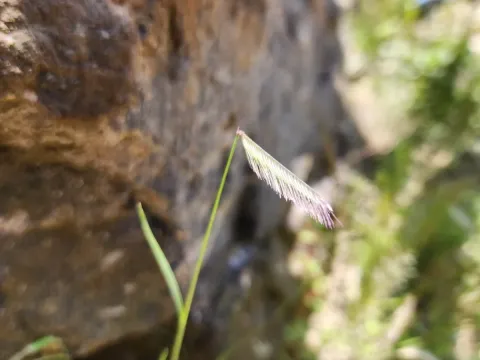
Bouteloua simplex
Bouteloua simplex
Bouteloua simplex, commonly known as mat grama, is a warm-season grass that requires sufficiently warm soil temperatures for successful germination.
What the section contains
Bouteloua simplex
Sowing should ideally occur in late spring or early summer, once the threat of frost has passed and soil temperatures have stabilized above 15 degrees Celsius.
The seeds are relatively small and should be sown shallowly, ideally at a depth of 1 to 2 centimeters to ensure they have enough energy to emerge.
Proper soil preparation, including light harrowing, creates a firm seedbed which is essential for uniform germination and seedling establishment.
In large-scale applications, drilling is preferred over broadcasting to achieve a consistent planting depth and optimal seed-to-soil contact.
This species is highly adapted to arid and semi-arid environments, demonstrating exceptional drought tolerance due to its physiological efficiency.
Bouteloua simplex thrives in well-drained, sandy, or gravelly soils where water stagnation is unlikely to occur during periods of heavy rainfall.
Full sun exposure is a critical requirement for this grass; it performs poorly in shaded areas and requires significant solar energy for healthy growth.
It is well-suited for soils with low nutrient content, as it has evolved to efficiently utilize nitrogen and minerals in nutrient-poor ecosystems.
While tolerant of extreme heat, the plant requires consistent moisture during the initial seedling stage to develop a deep and resilient root system.
The primary threats to Bouteloua simplex include fungal pathogens, particularly in regions where humidity levels remain high for extended periods during the summer.
Root rot remains a significant concern if the soil does not provide adequate drainage, especially during unseasonably wet weather conditions.
Insect pests, such as aphids or grass-feeding beetles, can infest stands, potentially reducing both the forage yield and the overall vigor of the plants.
Weed management is vital during the establishment phase, as the relatively slow initial growth of the grass makes it vulnerable to competitive broadleaf weeds.
Regular field scouting is recommended to identify early signs of infestation or disease, allowing for targeted management before the problem affects the entire stand.
For forage production, harvesting should be performed before the plant reaches full maturity to maximize the nutritional content and digestibility for livestock.
Seed harvesting requires careful timing, typically when the spikelets turn a characteristic dark color, indicating that the seeds have reached physiological maturity.
Using combine harvesters requires precise adjustments to the air intake and drum speed to account for the lightweight nature of the grass seeds.
Post-harvest drying is essential to prevent moisture accumulation, which can lead to mold development and decreased viability of the stored seed.
Proper storage in a cool, dry environment ensures that the genetic quality and germination potential of the seeds remain intact until the next planting season.