
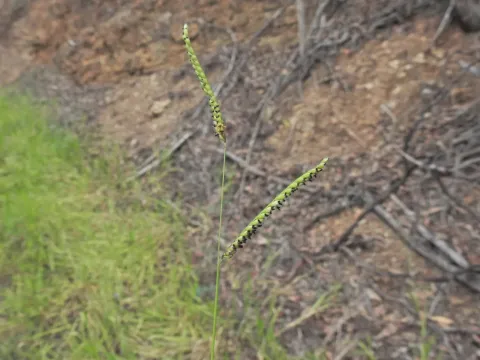
Brachiaria
Brachiaria (Trin.) Griseb.
Brachiaria is best sown at the beginning of the rainy season when soil temperatures are consistently above 20 degrees Celsius. This ensures rapid germination and early establishment of the root system.
What the section contains
Brachiaria
Sowing depth should be shallow, ideally between 1 and 2 centimeters, as the seeds are small and lack sufficient energy to emerge from greater depths. Proper seed-to-soil contact is critical for success.
Preparation of the field must involve thorough weed control, as young Brachiaria seedlings grow slowly and are easily suppressed by competitive weeds during their first few weeks of life.
Seeding rates typically range from 5 to 12 kilograms per hectare, depending on seed quality and purity. Mechanical seeders are preferred for uniform distribution, but broadcast sowing followed by light harrowing is also used.
In regions with distinct dry seasons, early planting is vital to allow the plants to become well-established before the soil moisture levels drop significantly.
As a member of the Poaceae family, Brachiaria thrives in tropical and subtropical climates. It is well-known for its ability to grow in low-fertility, acidic soils where other grasses might fail.
The plant requires full sun exposure and does not tolerate shade from trees or taller crops. It is highly efficient at photosynthesis under high light conditions, which promotes vigorous growth.
While the grass is drought-tolerant due to its deep root architecture, it performs poorly in waterlogged conditions. Well-drained soils are essential to prevent root rot and ensure long-term stand longevity.
Soil pH levels between 5.0 and 7.0 are generally considered optimal. While the grass is adaptable, strategic fertilization with nitrogen and phosphorus is necessary for achieving high biomass production.
The grass is known for its high growth rate, which can quickly cover bare soil, making it an excellent choice for erosion control on slopes if managed properly.
Yield potential of Brachiaria is significant, often reaching 10 to 15 tons of dry matter per hectare annually under optimal management conditions with moderate fertilizer inputs.
Productivity is highly dependent on grazing management or harvesting frequency. Rotational grazing is recommended to prevent overgrazing, which can degrade the pasture and reduce overall plant vitality.
The nutritional quality is highest during the vegetative stage. As the plants mature and approach the flowering stage, the stem-to-leaf ratio increases, leading to a decrease in protein content and digestibility.
Intensive management systems may allow for grazing intervals as short as 30 to 45 days during the peak growing season, ensuring a constant supply of high-quality feed for livestock.
Regular monitoring of forage availability is essential to balance stocking rates with the regrowth rate, ensuring sustainable pasture productivity throughout the entire year.
Spittlebugs represent the most significant pest threat to Brachiaria pastures. These insects feed on the sap of the grass, often causing severe wilting, chlorosis, and widespread death of the forage.
Fungal diseases, such as leaf spot, can become problematic during periods of high humidity and poor air circulation. Maintaining proper density and periodic grazing helps mitigate these risks.
Root-knot nematodes can occasionally affect growth, particularly in sandy soils. Selecting resistant cultivars is one of the most effective strategies for managing these soil-borne pests.
Early-stage weed competition is a major threat to stand establishment. If left unchecked, weeds can significantly reduce the potential yield and lifespan of the pasture.
Maintaining a balanced ecosystem through proper management practices, such as strategic resting of pastures, helps the plants recover and develop natural resilience against local threats.
Harvesting for hay or silage is most productive when the plants are in their vegetative stage, just before the onset of flowering, to maximize nutrient density.
When cutting for hay, a stubble height of 5–10 centimeters should be maintained to allow for rapid regrowth from the plant base. Cutting too low can delay the next harvest cycle.
For high-quality hay, the cut material should be tedded to facilitate uniform drying, aiming for a moisture content below 18 percent to prevent mold and quality loss during storage.
Silage production is a common practice for Brachiaria in larger operations. The grass is chopped, tightly packed, and sealed to ensure anaerobic fermentation, preserving quality for winter use.
Storage areas must be protected from moisture and pests to maintain the nutritional integrity of the harvested forage until it is required for animal consumption.