
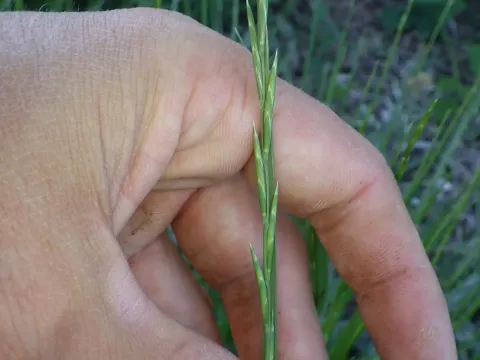
Brachypodium phoenicoides
Brachypodium phoenicoides
Brachypodium phoenicoides is a perennial rhizomatous grass belonging to the Poaceae family. Sowing is typically carried out in the spring when soil temperatures reach 10–12 degrees Celsius, ensuring uniform germination across the field.
What the section contains
Brachypodium phoenicoides
In regions with Mediterranean climates, autumn sowing is also a viable option due to the plant's adaptability to moderate winter temperatures. Seeds should be planted at a shallow depth of no more than 2-3 centimeters to maintain optimal contact with moist soil layers.
The seeding rate is determined by the intended use of the land, whether for hay production or the restoration of degraded pastures. It is important to note that the early stages of development are characterized by moderate growth, making a clean seedbed essential.
Pre-planting soil preparation should be performed in advance to eliminate perennial weeds that may compete with the grass during the tillering stage. Rolling the soil after sowing helps preserve moisture and improves field emergence significantly.
Maintaining an optimal water balance during the first few months after germination is crucial for the establishment of the crop. Once established, the plant develops a robust root system that allows it to withstand various weather fluctuations efficiently.
The crop has moderate soil fertility requirements but performs best on well-drained calcareous and loamy soils. It demonstrates high tolerance to drought and is capable of thriving under conditions of limited water availability.
Brachypodium phoenicoides prefers sunny locations with direct sunlight exposure, which is necessary for vigorous photosynthesis and biomass formation. It also shows good tolerance to saline soils, making it a promising candidate for land reclamation projects.
The optimal pH range for stable growth lies between neutral and slightly alkaline. The plant is sensitive to waterlogging, so areas prone to flooding should be avoided when selecting sites for establishment.
Its adaptability to diverse climates allows it to be used effectively in regions with hot, dry summers where many other forage grasses lose productivity. The rhizomatous structure of the plant aids in slope stabilization and erosion control.
For high-intensity agricultural systems, applying phosphorus and potassium fertilizers during the growing season is recommended. Nitrogen applications should be managed carefully to avoid excessive vegetative growth at the expense of root development.
The economic value of Brachypodium phoenicoides lies in its consistent biomass production, which is suitable for livestock grazing and medium-quality hay. Yield is heavily dependent on seasonal climatic conditions and moisture availability.
With proper grazing management, the crop can recover quickly, providing sustainable fodder over extended periods. Implementing specialized mowing cycles helps maintain the productivity and quality of the grassland stand.
To maximize biomass output, it is often beneficial to integrate the grass with legume components to enhance the protein content of the forage. In monoculture stands, productivity may decline after 5-6 years, requiring management practices to rejuvenate the field.
Hay quality is considered satisfactory if harvesting occurs before the stems become overly fibrous and the seeds set. Early harvesting ensures better digestibility and higher mineral content in the feed.
Seed harvesting for reproduction requires monitoring the moisture levels of the inflorescences, as seed shattering can be significant. Modern mechanical harvesting methods allow for efficient seed collection on a commercial scale.
Brachypodium phoenicoides exhibits high natural resistance to most common grass diseases, including rusts and powdery mildew. This trait makes it an attractive option for organic farming and ecological restoration projects.
Pests such as grass flies and aphids may pose a risk, particularly during abnormally warm spring seasons. Regular population monitoring allows for timely intervention to prevent significant yield losses.
Root rot diseases occur primarily under conditions of extreme waterlogging or poor irrigation management. Adherence to crop rotation principles helps minimize the risk of pathogen buildup in the soil, maintaining field health.
Improper grazing practices can lead to the proliferation of competitive weeds that suppress the growth of Brachypodium. Regular maintenance and control of stand density are the best preventive measures against undesirable vegetation.
Chemical plant protection is only justified in the event of severe pest outbreaks. In most scenarios, agronomic management and maintaining plant vigor are sufficient to ensure the crop's competitiveness within the agro-ecosystem.
Hay harvesting should take place during the heading phase, when the plant is at its nutritional peak. At this stage, the stems remain relatively soft, ensuring better palatability and livestock consumption.
For efficient drying, the mown mass must be periodically turned to ensure uniform evaporation of moisture. Stored hay should be kept in dry, well-ventilated buildings to prevent mold development and nutrient loss.
In grazing scenarios, it is critical to control stubble height to avoid overgrazing. Leaving a stubble height of 5–7 centimeters facilitates rapid regrowth from dormant buds.
When collecting seeds, harvesting should occur when the seeds reach the wax stage of maturity. Seed production areas require careful handling to prevent mechanical damage to the inflorescences and premature seed loss.
Following harvest, stubble can be utilized for late-season grazing or incorporated into the soil as organic matter, which contributes to long-term soil fertility and nutrient cycling.