
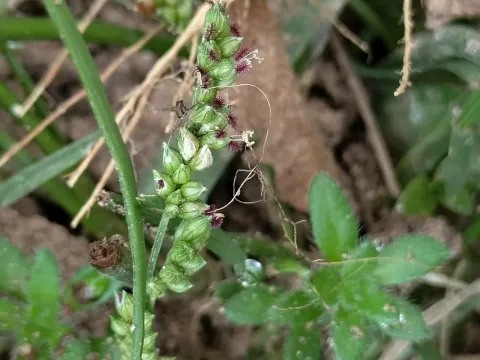
Barnyard grass
Echinochloa
Sowing dates for Barnyard grass (Echinochloa) are determined by local climatic conditions and soil warming. Being a heat-loving crop, it requires soil temperatures at planting depth to reach at least +12…+15°C for successful germination.
What the section contains
 Aleman grass
Echinochloa polystachya
Aleman grass
Echinochloa polystachya
 Barnyard grass
Echinochloa oryzoides
Echinochloa callopus
Echinochloa callopus
Barnyard grass
Echinochloa oryzoides
Echinochloa callopus
Echinochloa callopus
 Echinochloa haploclada
Echinochloa obtusiflora
Echinochloa obtusiflora
Echinochloa haploclada
Echinochloa haploclada
Echinochloa obtusiflora
Echinochloa obtusiflora
 Echinochloa paludigena
Echinochloa picta
Echinochloa picta
Echinochloa paludigena
Echinochloa paludigena
Echinochloa picta
Echinochloa picta
 Echinochloa pyramidalis
Echinochloa pyramidalis
Echinochloa pyramidalis
 Jungle rice
Echinochloa colonum
Jungle rice
Echinochloa colonum
 Peacock grass
Echinochloa crus-pavonis
Peacock grass
Echinochloa crus-pavonis
 Rice barnyard grass
Echinochloa oryzicola
Rice barnyard grass
Echinochloa oryzicola
 Smooth barnyard grass
Echinochloa glabrescens
Swamp barnyard grass
Echinochloa helodes
Smooth barnyard grass
Echinochloa glabrescens
Swamp barnyard grass
Echinochloa helodes
 Turner's millet
Echinochloa turneriana
Ugandan barnyard grass
Echinochloa ugandensis
Turner's millet
Echinochloa turneriana
Ugandan barnyard grass
Echinochloa ugandensis
 Walter's millet
Echinochloa walteri
Walter's millet
Echinochloa walteri
Barnyard grass
In temperate regions, the optimal sowing period is mid-to-late spring. Early planting in cold soils is discouraged as it often leads to poor stand establishment, uneven emergence, and increased susceptibility to fungal diseases.
The recommended seeding depth is shallow, ranging from 2 to 4 centimeters. On lighter, sandier soils, a slightly deeper placement is acceptable, while in heavy clay soils, it should be kept to the minimum to allow for efficient sprout development.
Post-sowing soil compaction is a crucial step to ensure proper seed-to-soil contact. This practice promotes capillary moisture movement toward the seeds, which is vital for uniform and rapid germination in various field conditions.
Seeding rates are calculated based on the intended use, whether for green biomass or seed production. Typical rates vary from 10 to 18 kilograms per hectare, depending on the row spacing and the specific cultivar used in the rotation.
Echinochloa belongs to the Poaceae family and is known for its remarkable ecological adaptability. It thrives in various environments, including flood-prone areas, as it can tolerate temporary waterlogging better than many other cereal crops.
The plant has high temperature requirements, with active growth occurring at temperatures exceeding +20°C. Cool, overcast weather significantly slows down its development, which can affect the overall biomass production during the season.
Regarding soil, it is relatively undemanding. While it performs best in fertile, well-draining soils, it has been observed growing successfully in slightly saline soils where other standard crops might struggle to survive.
As a long-day plant, Barnyard grass thrives under high light intensity. Adequate exposure to sunlight is essential for reaching its full photosynthetic potential, ensuring maximum energy content in the stems and leaves.
It is highly responsive to nitrogen fertilization, which significantly boosts tillering and leaf area. Proper nutrition management, along with adequate soil moisture during the initial growth stages, is key to high yields.
The yield potential of Barnyard grass is substantial when managed under professional agricultural conditions. With proper fertilization and irrigation, it provides excellent returns on investment for livestock operations.
Green biomass yields average between 250 and 450 centners per hectare, depending on the number of cuts per season. Its ability to regrow quickly allows for multiple harvests, maximizing land productivity throughout the summer months.
Seed yields range from 20 to 40 centners per hectare. The seeds are highly nutritious, often compared to millet in quality, making them a valuable component in animal feed rations and potentially for human consumption.
Quality parameters are highly dependent on the harvest timing. To ensure the best nutritional value, the biomass should be harvested just before the heading phase, when protein concentration is at its peak and the stems remain soft.
- High biomass yield under irrigation.
- Regrowth potential enables 2–3 cuts per season.
- Excellent nutrient retention in seeds.
Fungal diseases, such as smut, represent the primary threat to Barnyard grass crops, especially in high-humidity environments. Infected seeds or contaminated soil can lead to significant yield losses if not managed correctly.
Pests like cereal flies and aphids can severely damage seedlings during the early vegetative stage. Monitoring for these insects is vital, as early-season infestations can devastate the plant population before it gains vigor.
While the plant itself is sometimes considered a weed in other crops, it faces competition from other grasses during its own establishment phase. Keeping the fields clean in the first few weeks is crucial for a successful stand.
Root rots may occur if crop rotation practices are ignored. To mitigate this risk, it is advised to avoid monocropping and to ensure adequate soil drainage, preventing the buildup of soil-borne pathogens over time.
Integrated pest management, including seed treatment and selective insecticide application during peak pest activity, is the standard approach for maintaining crop health and maximizing harvested tonnage.
Harvesting for green forage should be completed during the early heading stage. This timing ensures the highest levels of digestible nutrients and the best palatability for livestock, preventing the forage from becoming too lignified.
When producing hay, the use of mower-conditioners is recommended to facilitate rapid moisture removal. Proper conditioning significantly reduces drying time and lowers the risk of mold formation in the stored hay bales.
For seed production, harvesting takes place when the grains reach full wax ripeness. Straight combining is the standard method, though machinery must be precisely calibrated to minimize grain loss due to shattering.
Post-harvest moisture management is critical. Seeds must be dried to a moisture content of approximately 13% before being placed into long-term storage to prevent heating, spoilage, and the development of mycotoxins.
Effective storage requires clean, dry, and well-ventilated facilities. Routine inspections of grain storage are necessary to ensure that quality remains high throughout the storage period until the product is processed or sold.