
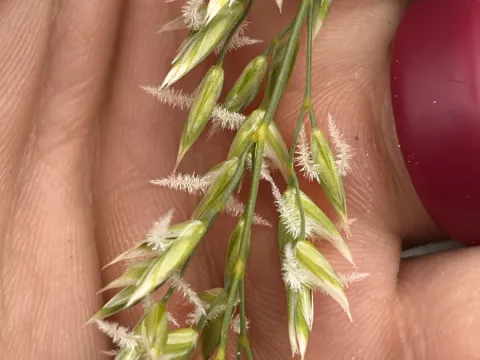
King's fescue
Festuca kingii
King's fescue is typically sown in early spring or autumn to take advantage of moist soil conditions that are ideal for successful seed germination.
What the section contains
King's fescue
The seeds should be planted at a depth of 1–2 centimeters, ensuring they are adequately covered while remaining close enough to the surface for efficient emergence.
It is essential to prepare a firm, level seedbed to promote uniform contact between the seeds and the soil, which helps maintain moisture levels around the developing roots.
Seeding rates should be adjusted based on the intended use of the crop, whether for intensive pasture grazing or for mechanical hay production.
During the initial stages of establishment, it is critical to keep the area free from aggressive weeds that could compete with the young fescue seedlings for space and nutrients.
King's fescue is a member of the Poaceae family, recognized for its hardiness and ability to thrive in diverse mountain and highland environments.
This grass species prefers well-drained, fertile soils with a neutral pH, although it exhibits significant tolerance to a variety of soil types.
It is highly regarded for its ecological resilience, showing strong adaptability to temperature fluctuations and periods of seasonal moisture deficiency.
Full sun exposure is required for optimal vegetative development, as shaded environments tend to reduce density and overall plant vigor.
Proper aeration is crucial for the root system, as compacted or waterlogged soils can severely impact plant health and increase susceptibility to disease.
The total biomass yield of King's fescue is largely determined by the management practices applied, including irrigation and targeted nutrient application.
Balanced fertilization with nitrogen supports rapid leaf growth and high-quality forage production, making it an excellent candidate for intensive rotational grazing.
The species is known for its multi-cut potential, allowing farmers to harvest the crop several times throughout the growing season without sacrificing future productivity.
It is often used in grass-legume mixtures to create balanced feed that maximizes nutritional content for ruminant livestock.
With consistent and proper management, this grass can maintain high levels of productivity over several years, ensuring stable returns on initial planting investment.
Common pathological threats include rust diseases, which are more likely to occur in dense stands during prolonged periods of high humidity and poor air circulation.
Insect pests, such as stem-boring flies, can cause damage to young shoots, leading to thinner stands if not managed during the early stages of growth.
Integrated pest management strategies, including crop rotation and proper harvesting schedules, are the most effective ways to mitigate disease risks.
Regular field scouting is recommended to identify early signs of infestation and to determine if chemical interventions are necessary to preserve yield.
Maintaining a healthy, vigorous crop is the best defense against pests and diseases, as well-fed plants are more capable of resisting opportunistic infections.
For the best nutritional value in hay or forage, harvest should take place at the late booting or early heading stage when protein content is at its peak.
When harvesting for hay, thorough drying is necessary to prevent spoilage, but care must be taken to minimize nutrient loss due to excessive exposure to sunlight.
Seed harvesting should be timed carefully when the panicles turn golden-brown to prevent losses from shattering while ensuring maximum seed viability.
Using sharp cutting equipment ensures a clean cut, which promotes faster regrowth of the aftermath and minimizes stress on the plant crowns.
Post-harvest management should include light fertilization to help the plants recover and accumulate sufficient energy reserves before entering the winter dormancy phase.