

Selenit
«Нанджин Ессенс Файн-Кемікал Ко. Лтд» (Китай)
Herbicides
0
0
·
1.4K
4 offers
12.06 €per 1 l
Buy
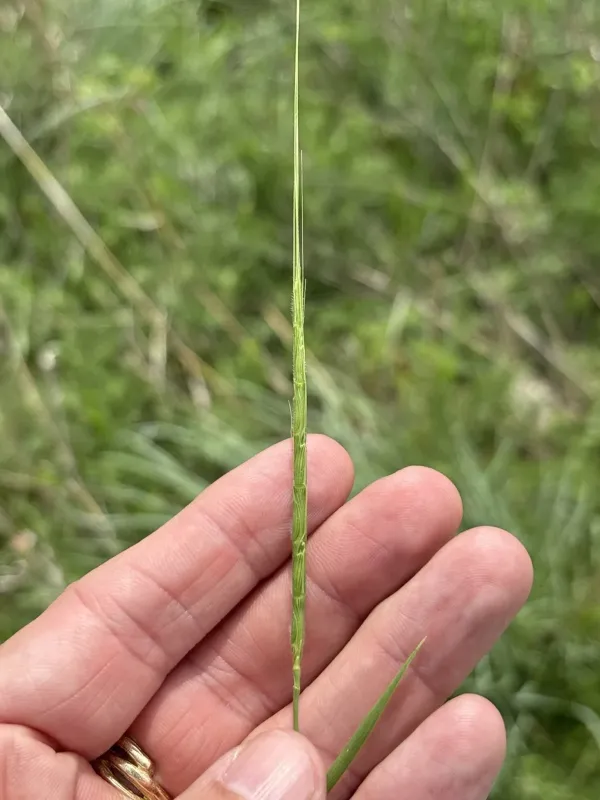
Jointed goatgrass (Aegilops cylindrica) is a winter annual grass that shares a similar life cycle with winter wheat. Germination typically begins in late summer or autumn, allowing the plant to establish a robust root system before the onset of winter.
The timing of seedling emergence is highly synchronized with winter wheat planting dates. This synchronicity is one of the primary reasons for its success as a weed, as it competes for space and resources during the early stages of wheat development.
While most seeds germinate in the autumn, Aegilops cylindrica can demonstrate staggered emergence. Some seedlings may appear in the spring, although these are generally less competitive than the autumn-emerged plants that have successfully overwintered.
Seeds can germinate from depths of up to 10 centimeters, making them resilient to shallow mechanical tillage. This depth of emergence contributes to the weed's ability to survive standard seedbed preparation efforts in many agricultural systems.
Crop rotation is essential for management. By incorporating summer annual crops, farmers can disrupt the life cycle of the weed, as the seed bank in the soil typically has a limited longevity of only a few years.
This species belongs to the Poaceae family and is a close genetic relative of wheat. It is exceptionally well-adapted to dry, semi-arid climates, displaying high drought tolerance that allows it to outcompete wheat in moisture-limited environments.
Jointed goatgrass is not selective regarding soil type. It thrives in diverse textures, including clay, silt, and sandy soils, and is highly tolerant of low-fertility conditions where other plants might struggle to survive.
Exposure to cold temperatures, known as vernalization, is a requirement for the plant to transition from the vegetative to the reproductive phase. This biological trait is what makes it so prevalent and damaging in winter wheat production zones.
Light availability significantly influences the growth habit of the plant. In sparse wheat stands, jointed goatgrass tillers aggressively, creating dense patches that can produce thousands of seeds per square meter, quickly exhausting soil nutrients and water.
The plant has a deep root system that efficiently extracts water from lower soil profiles. During periods of drought, this competitiveness significantly reduces the available water for the primary crop, leading to lower yields.
Aegilops cylindrica serves as an important reservoir for numerous pathogens that affect wheat. By harboring these diseases, it ensures the persistence and spread of inoculum throughout the fields even during years when wheat is not present.
The weed is a primary host for several types of rust, including leaf rust and stem rust. These fungi can easily transition from the weed to the crop, potentially causing devastating outbreaks if weather conditions are favorable for fungal spread.
In addition to fungal pathogens, the plant is a host for viruses such as Wheat Streak Mosaic Virus. These viruses are often transmitted by eriophyid mites that move from the senescing goatgrass to the newly emerging winter wheat crop.
Several insect pests, including the Hessian fly and wheat stem sawfly, utilize jointed goatgrass as an alternative food source. The weed allows these insects to maintain their populations during off-seasons, increasing pest pressure on the primary crop.
Harvesting crops infested with jointed goatgrass is highly problematic due to the morphological similarity between the weed's seeds and wheat grains. Traditional grain cleaning equipment often fails to separate them effectively, leading to dockage at the elevator.
The seeds of Aegilops cylindrica have a natural tendency to shatter as they mature. This creates a cycle where harvesting equipment spreads the seeds across the field, further increasing the density of the weed for the subsequent growing seasons.
In fields with high levels of infestation, farmers may choose to harvest the crop for forage or silage instead of grain. This prevents the weed from producing viable seeds and helps manage the soil seed bank effectively.
Post-harvest management is critical. Shallow tillage immediately after harvest can stimulate the germination of shed seeds, which can then be controlled via herbicide application or further tillage before the next winter wheat crop is sown.
Cleaning combines and other agricultural machinery is a standard practice to prevent the transport of seeds between fields. Even a small amount of contamination can lead to significant management costs for the producer in future years.
