
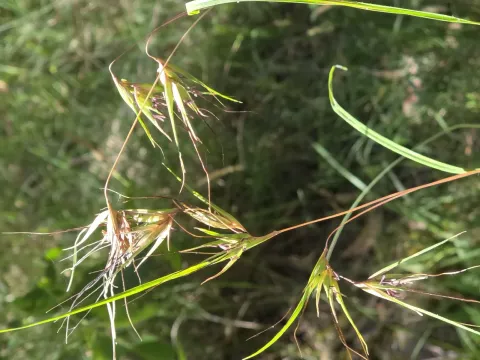
Kangaroo grass
Themeda australis
Kangaroo grass (Themeda australis) is a perennial grass belonging to the Poaceae family, widely recognized for its ecological and agricultural significance. It is a tufted grass known for its distinct, reddish-brown flower heads and resilient root system.
What the section contains
Kangaroo grass
Originating from Australia and parts of Asia, this species thrives in a variety of climates, including tropical and subtropical regions. It is well-adapted to environments where solar radiation is high and seasonal rainfall varies significantly.
The plant demonstrates a strong preference for well-drained soils, ranging from sandy loams to heavier clay soils. While it can tolerate low-nutrient substrates, its productivity significantly increases with proper soil enrichment and consistent moisture levels during the active growing phase.
Agronomic management of kangaroo grass includes providing enough space to prevent overcrowding and ensure adequate airflow. It is highly valued for erosion control as its dense network of roots stabilizes the soil structure effectively against wind and water erosion.
In modern agricultural settings, it is utilized as a source of forage and as an essential component in native pasture restoration projects. Its ability to regrow after fire or grazing events makes it a resilient plant for long-term pasture management.
The primary threats to Themeda australis include fungal pathogens that emerge during periods of prolonged humidity. Implementing proper spacing and harvesting protocols helps to maintain good air circulation, significantly reducing the risk of fungal outbreaks.
Pests, particularly aphids and certain leaf-feeding larvae, can impact plant vigor if left unmanaged. Regular monitoring is advised, especially in dense stands where pest populations can establish quickly during favorable weather conditions.
Invasive weed competition poses a serious challenge to young stands. If weeds are allowed to overgrow, they can outcompete the kangaroo grass for light and soil nutrients, necessitating mechanical weeding or selective control measures.
Overgrazing remains a critical factor in the decline of kangaroo grass health. Improper timing or intensity of grazing can stress the plant, making it more susceptible to opportunistic infections and soil degradation around the root zone.
General health is maintained through responsible land management. By preventing soil compaction and ensuring balanced nutrient availability, the plant can effectively fend off common biotic pressures and maintain robust growth over many seasons.