
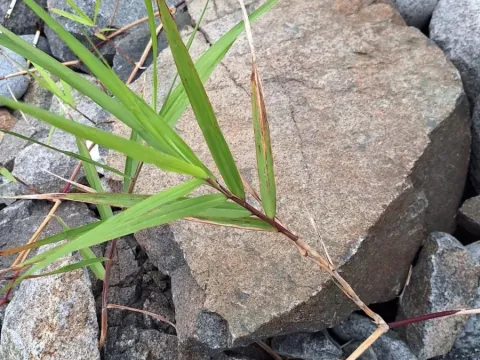
Japanese reed
Phragmites japonicus
Japanese reed is primarily propagated vegetatively by dividing rhizomes, as seed propagation is often unreliable and requires specific moisture conditions. The optimal planting period is early spring once soil temperatures reach at least 10 degrees Celsius.
What the section contains
Japanese reed
Rhizomes should be placed in prepared trenches approximately 10-15 centimeters deep. Ensuring proper spacing is crucial to prevent overcrowding while allowing for the rapid expansion of the root system.
In regions with milder winters, autumn planting is possible, though spring is generally preferred in colder climates to ensure the plant establishes itself before the onset of winter.
Because the species has a vigorous growth habit, it is essential to establish clear boundaries or use root barriers if planting in a controlled landscape to prevent it from becoming invasive.
Pre-planting soil preparation should include saturating the area with water and enriching the substrate with organic matter to support the rapid development of new shoots.
Japanese reed belongs to the Poaceae family and is a true hydrophyte, thriving in environments with high water levels and constant soil moisture throughout the growing season.
The plant performs best in heavy clay, silt, or peat soils where the water table is at or above the ground surface, reflecting its natural wetland habitat.
While the species prefers full sun, it demonstrates moderate shade tolerance, which allows it to adapt to diverse ecological niches along water bodies.
The ideal temperature range for active growth is between 20-25 degrees Celsius, though established populations exhibit significant cold hardiness during the winter dormancy period.
Soil pH should ideally be neutral or slightly acidic. The plant is highly sensitive to water quality and may be negatively affected by high concentrations of industrial pollutants.
The yield of Japanese reed biomass depends heavily on water availability and the nutrient content of the soil, with optimal yields found in well-managed floodplains.
Under favorable conditions, mature stands can produce up to 20 tons of dry biomass per hectare, making it a viable candidate for various industrial and biofuel applications.
Peak production capacity is usually reached within two to three years post-planting, as the rhizome network becomes dense and fully occupies the designated area.
Regular maintenance, including the selective removal of older stems, encourages the production of new, nutrient-rich biomass in subsequent growing seasons.
Total yield is also influenced by climatic factors, such as the length of the frost-free season and the amount of precipitation during the peak summer months.
Japanese reed is generally robust; however, stagnant water and overcrowding can create conditions favorable for fungal diseases, such as leaf rust, which can reduce foliage quality.
Insect pests, particularly stem-boring larvae and certain aphid species, can cause localized damage to developing shoots during the early stages of the growing season.
In dry conditions or when the water level drops significantly, the plant may be susceptible to spider mite infestations, leading to premature leaf senescence.
Management of these threats is best achieved through cultural practices, including maintaining consistent water levels and ensuring adequate aeration of the stand.
Chemical intervention is rarely recommended due to the plant's proximity to aquatic ecosystems, making integrated pest management the preferred approach.
Harvesting for technical purposes is typically performed in late autumn or early winter when the plant is dormant and the stems have reached maximum structural strength.
For uses involving animal fodder or forage, harvesting should occur much earlier, during the peak vegetative stage, before the stems develop high levels of lignin.
Mechanized harvesting requires equipment designed for wet terrain to prevent soil compaction and protect the integrity of the rhizome network below the surface.
Harvested material must be dried properly in windrows or industrial dryers to prevent fermentation and mold development, which would degrade the biomass quality.
After harvest, it is beneficial to clear debris to promote uniform regrowth in the following spring and to allow light to reach the emerging new shoots.