
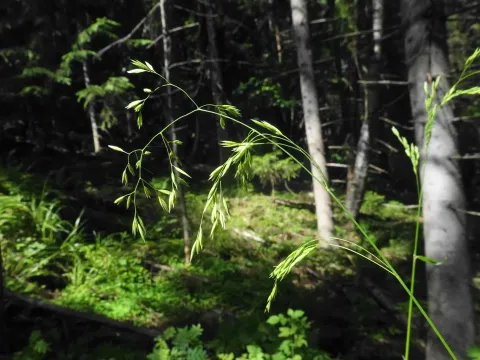
Wood fescue
Festuca altissima
Wood fescue (Festuca altissima) is a perennial grass species belonging to the Poaceae family. It is natively distributed across the woodland areas of Europe and parts of Asia, where it thrives in shaded and nutrient-rich forest floor environments.
What the section contains
Wood fescue
The plant is biologically characterized by its dense tufted growth habit, which allows it to stabilize soil effectively in forest ecosystems. It features narrow, elongated leaves and open panicles, exhibiting excellent shade tolerance compared to other forage grasses.
In terms of soil and climate, it prefers moist, well-drained soils with a balanced pH level. It is highly adapted to cooler climates and is capable of withstanding winter temperatures, making it a reliable perennial cover in temperate forest zones.
Agricultural management of wood fescue involves seedbed preparation that ensures moisture retention while avoiding soil compaction. Due to its slow establishment rate, weed control during the seedling stage is critical for successful long-term stand development.
Economically, this species is valued for sustainable forage production in woodland grazing systems and as a key component in environmental restoration projects. It provides stable ground cover that persists even under significant tree canopy cover.
The primary threats to wood fescue stands include fungal pathogens such as powdery mildew and various rust diseases. These conditions are typically exacerbated by high humidity and excessive planting density, which limit airflow through the canopy.
Pests such as cereal flies and stem-boring insects may affect the plant during its active growth phases. Integrated pest management, including regular crop monitoring and promoting biodiversity, is recommended to mitigate the impact of such threats on biomass yield.