
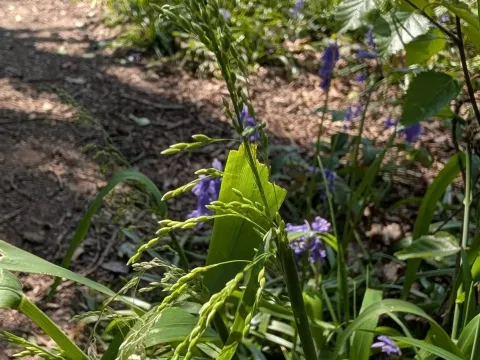
Wood millet
Milium
The sowing of Milium (Wood millet) is typically carried out in early spring as soon as the soil reaches a temperature of 5–8 degrees Celsius.
What the section contains
Wood millet
Early sowing ensures the plant takes advantage of residual soil moisture, which is essential for rapid germination and establishment.
Standard agronomic practice involves row seeding with an interval of 15 cm between rows to provide enough space for individual development.
Seeds should be sown at a depth of 2 to 3 cm to prevent desiccation while ensuring they have enough strength to emerge through the soil surface.
Post-sowing soil compaction is recommended to enhance capillary water movement and ensure optimal contact between the seeds and the soil particles.
As a member of the Poaceae family, Milium exhibits strong resilience and adaptability to various temperate climatic conditions.
The crop thrives in fertile, well-drained loamy soils with a neutral pH, which support vigorous root systems and overall plant health.
While it is relatively hardy, consistent moisture is required during the vegetative growth phase to prevent yield loss from drought stress.
The plant prefers bright locations but is noted for its ability to tolerate partial shade, making it useful in diverse cropping systems.
It is important to select sites that are free from waterlogging, as the species is sensitive to poor soil aeration caused by stagnant water.
With proper management, the green matter yield of Wood millet can range between 20 and 30 tonnes per hectare, depending on local conditions.
Seed production yields generally fall between 1,000 and 2,000 kilograms per hectare under optimal environmental and nutrient conditions.
Yields are highest when nitrogen availability is optimized during the tillering stage, promoting robust vegetative growth and tiller formation.
Climate patterns, particularly the distribution of rainfall during the mid-season, significantly dictate the final harvested volume of the crop.
Regrowth potential allows for multiple cuts in a single season if the soil moisture status is maintained after the initial harvest.
Fungal pathogens such as rust and powdery mildew are the primary disease threats, especially in environments with high humidity and poor airflow.
Insect pests, including aphids and various grass-feeding flies, can cause damage, requiring integrated pest management strategies.
Root systems may be susceptible to soil-borne larvae such as wireworms, necessitating thorough soil preparation and potentially seed treatment.
- Implement strict crop rotation patterns.
- Monitor field edges for early signs of pest outbreaks.
- Use certified disease-resistant seed varieties.
Management should focus on preventative measures to minimize the need for heavy chemical applications during the growing cycle.
Harvesting for forage should occur during the booting or early heading stage to capture the highest nutritional value in the biomass.
Seed harvesting requires a combine harvester set to minimize losses, as the seeds have a natural tendency to shatter when fully mature.
Timing the harvest to coincide with dry weather is critical for the storage stability of both seeds and the harvested forage material.
Following harvest, seeds must be cleaned and dried to a moisture content of 13-14% to ensure safe storage and prevent fungal growth.
Proper storage in well-ventilated areas protects the yield from spoilage and ensures the viability of the seed for future sowing seasons.