
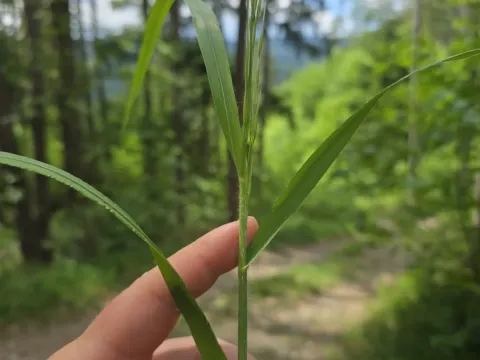
Wood brome
Bromus ramosus
Wood brome is a perennial grass species that requires specific preparation for successful establishment. The ideal time for sowing is during the early spring when the soil temperature consistently reaches 8–10 degrees Celsius, facilitating robust germination and root development.
What the section contains
Wood brome
For optimal density, the seeds should be planted at a depth of 1.5 to 2.5 centimeters. Row spacing is typically recommended at 15–20 centimeters to allow enough space for plant development while minimizing weed competition in the early growth stages.
The seeding rate varies depending on soil fertility and climate, generally falling between 12 and 16 kilograms per hectare. It is crucial to use certified seeds with high germination rates to ensure a uniform stand and maximum productivity of the forage area.
Post-sowing soil compaction using rollers is a standard practice to improve seed-to-soil contact. This practice retains soil moisture near the seed, which is vital during the critical period when the seedlings are establishing their primary root systems.
In the first year of growth, wood brome develops slowly, making weed management essential. Mechanical harrowing during the tillering stage can significantly help reduce competition from weeds and promote healthier grass development throughout the season.
As a member of the Poaceae family, wood brome is a moisture-loving species that thrives in temperate climates. It performs exceptionally well in areas where rainfall is consistent, ensuring enough moisture for biomass production throughout the growing season.
The plant adapts to various soil types but prefers fertile loams with a neutral pH. It is notably shade-tolerant, which sets it apart from many other forage grasses, making it an excellent choice for woodland pastures or areas with canopy cover.
Temperature resilience is a key feature of this species, allowing it to survive cold winter conditions effectively. However, it does not tolerate waterlogged soils, so proper site selection must prioritize well-drained locations to ensure long-term stand viability.
Soil fertility management is crucial for high yields. Incorporating nitrogen-based fertilizers in early spring stimulates rapid leaf growth, while potassium applications can enhance the overall vigor and disease resistance of the plants during the drier months.
Wood brome features a deep, fibrous root system that provides stability and helps the plant access nutrients and water from deeper soil horizons. This feature makes it quite resilient, contributing to its status as a reliable perennial component in permanent grasslands.
Yield potential depends heavily on the intensity of management and soil nutrient levels. Under optimal conditions and proper agricultural management, wood brome can produce significant quantities of green biomass, often exceeding 250–350 centners per hectare across two cuts.
From a nutritional standpoint, wood brome provides high-quality forage rich in essential proteins and fibers. It is particularly valuable as a winter feed source, as its nutritional profile remains relatively stable when harvested and stored properly as hay.
Seed harvesting requires precision because the panicles tend to ripen unevenly. Harvesting should ideally begin when the seeds reach the wax maturity stage to prevent significant yield losses due to shattering before the machinery can complete the work.
The species demonstrates excellent regrowth capacity after cutting, which makes it ideal for mixed grazing systems. It can be grazed effectively by cattle and horses, providing a nutritious feed source that supports animal performance and weight gain.
When used in pasture mixtures with legumes like clover, wood brome benefits from nitrogen fixation, which further increases its biomass production. This synergy improves the overall nutritional value of the pasture, benefiting both the soil and the livestock grazing it.
The most common disease affecting wood brome is rust, which can cause significant foliar damage and reduce the quality of the forage. Fungicide application may be necessary if weather conditions are conducive to fungal spore spread, particularly during damp summers.
Powdery mildew can also affect plant health, especially in thick or overcrowded stands. Maintaining proper stand density and avoiding excessive nitrogen fertilization can help reduce the incidence of this disease by improving air circulation around the stems.
Pests such as cereal flies and aphids can cause damage by feeding on young plant tissue. Monitoring for these pests in the early spring is vital, as early detection allows for timely intervention using biological or chemical control methods before damage becomes extensive.
Wireworms can be a significant problem in newly established fields, as they feed on the roots and can cause complete stand failure. Seed treatment with appropriate insecticides is the best preventive measure to ensure the survival of the seedlings during their most vulnerable phase.
Overall plant health and vigor are the best defenses against pathogens. Ensuring the crop is well-fed with balanced nutrients helps the grass develop stronger cellular structures, making it naturally more resistant to the stressors found in agricultural ecosystems.