
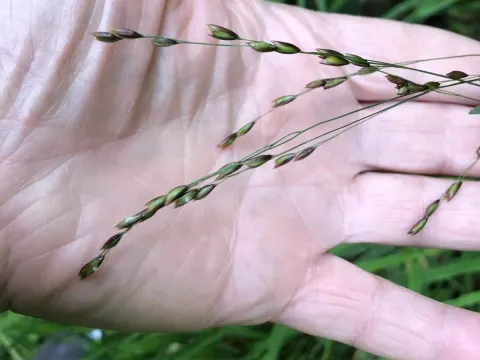
Wood melick
Melica uniflora
Wood melick is a perennial grass species that typically propagates through seed germination during the early spring months.
What the section contains
Wood melick
Successful establishment in agricultural settings requires a well-prepared seedbed with fine soil structure to support early root development.
Seeds should be sown at a shallow depth of 1 to 2 centimeters to ensure adequate soil-to-seed contact while preventing desiccation.
Adequate soil moisture is critical during the sowing phase, as the seeds are sensitive to rapid fluctuations in environmental conditions.
Timing the planting with the arrival of stable soil temperatures is essential to optimize the germination rate and ensure healthy seedling growth.
Belonging to the Poaceae family, Melica uniflora thrives best in environments that mimic its natural woodland habitat, such as shaded areas.
The plant demonstrates a strong preference for fertile, loamy soils that maintain consistent moisture levels without becoming waterlogged.
It performs optimally in neutral to slightly acidic pH conditions, which facilitate the availability of essential micronutrients for the grass.
Exposure to extreme heat or intense direct sunlight should be avoided, as the plant is adapted to moderate light intensities found in understory areas.
Proper field management includes ensuring good air circulation around the plants to prevent the development of physiological stress during peak growth.
The productivity of wood melick as a commercial crop is relatively low, making it more suitable for ecological restoration or niche forage use.
Dry matter yields are heavily influenced by local soil fertility, moisture availability, and the density of the existing plant population.
Given its growth habits, wood melick is rarely used as a monoculture and is better utilized in diverse pasture or landscape mixtures.
Farmers should consider the slow initial establishment rate, which implies that high yields are not typically achievable in the first season.
Management practices should prioritize sustainable harvest intervals to ensure the long-term survival of the perennial root systems.
Fungal infections, particularly root rot, are the primary biological threats when environmental conditions turn excessively wet or poorly drained.
Pests such as aphids and specialized grass-feeding insects can cause significant damage to the leaf tissue if infestations are not addressed.
Competition from aggressive weed species can severely impact the success of Melica uniflora, especially during the early stages of its establishment.
Implementing an integrated pest management strategy is highly recommended to maintain crop health without disrupting the local ecosystem.
Routine monitoring for signs of stress or pathogen activity allows for timely interventions that can prevent widespread damage to the field.
Harvesting wood melick requires precision, with the optimal timing being the peak flowering phase to ensure the nutritional quality of the forage.
For seed production, harvest should take place during the stage of physiological maturity, monitoring for signs of natural shattering of the seeds.
Mechanical harvesting equipment must be calibrated to handle the delicate structure of the grass without causing undue damage to the root base.
Post-harvest handling should involve immediate drying in a ventilated, shaded environment to maintain the structural integrity of the harvested material.
Storage facilities must be optimized for airflow to prevent moisture buildup, which can lead to mold and the subsequent degradation of the harvest.