
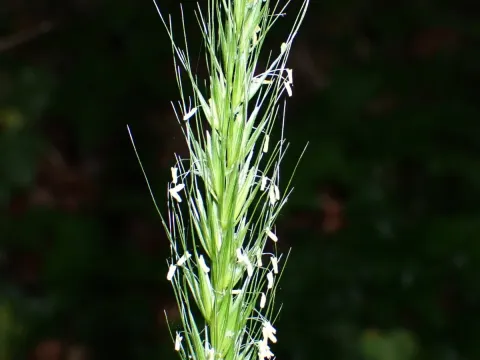
Wood barley
Hordelymus
Wood barley is a perennial grass species that typically propagates through seeds. In its natural forest environment, seeds naturally disperse at the end of the summer season and undergo stratification during the winter months.
What the section contains

Wood barley
For agricultural cultivation, seeds are best sown in late autumn to mimic natural conditions. This winter sowing ensures that seeds pass through the necessary dormancy-breaking process, leading to uniform germination in the early spring.
When spring sowing is unavoidable, seeds must be subjected to artificial cold stratification. Using growth regulators and specific temperature treatments significantly improves the germination rate and seedling vigor.
Sowing depth is critical due to the small size of the seeds. It is recommended to bury them no deeper than 1-2 centimeters. After spreading, light soil compaction is required to ensure good contact between the seed and the soil moisture.
Row spacing varies depending on the purpose. For seed production, wider rows are preferred to allow for better air circulation and easier harvesting. For forage production, closer row spacing is used to maximize biomass density.
As a forest-dwelling species, wood barley thrives in shaded or semi-shaded environments. Direct, intense sunlight during the summer heat can stress the plants, leading to wilting and reduced vegetative growth.
Soil quality is a major factor in the success of this crop. It prefers nutrient-rich, well-draining loamy soils with a neutral to slightly alkaline pH. High organic matter content is essential for long-term health.
Consistent moisture is required for healthy plant development. Wood barley does not tolerate drought conditions, but it is equally sensitive to waterlogging. Good soil structure and drainage are vital to prevent root decay.
The climate should be temperate, characterized by moderate temperatures and adequate humidity. While the plant has some tolerance for frost, it needs a protective layer of snow in very cold regions to prevent damage to the crown.
Effective agronomic management requires precise nutrient application. A balanced fertilizer program, focusing on nitrogen early in the season, encourages strong leaf production, which is essential for maximizing forage potential.
Wood barley is susceptible to various fungal pathogens that flourish in humid conditions. Rust fungi, which create distinct colored pustules on the leaves, are common and can severely limit the plant's photosynthetic capacity.
Powdery mildew often appears during periods of high humidity and poor air circulation. It manifests as a white, powdery coating on foliage, which drains the plant of energy and degrades the overall quality of the forage.
Insect pests, such as cereal flies and aphids, can cause significant damage to young plants. By feeding on sap or boring into stems, these pests can stunt plant growth and cause irregular stand establishment.
Root rot represents a serious threat, particularly in heavy or poorly drained soils. Once the root system is compromised, the entire plant becomes weak and is likely to perish if proper corrective measures are not taken.
Disease control is best managed through integrated pest management. Maintaining proper row spacing, ensuring good soil drainage, and removing old plant debris are key strategies for reducing the prevalence of these threats.