
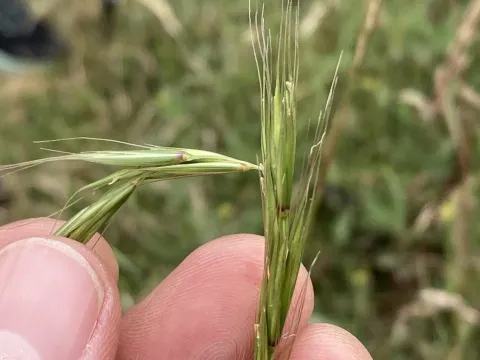
Blue wildrye
Elymus glaucus
Blue wildrye is typically sown in early spring or during the late summer to take advantage of natural soil moisture levels. Proper timing ensures that the root system develops sufficiently before extreme weather sets in.
What the section contains
Blue wildrye
A seed depth of approximately 1 to 2 centimeters is optimal for germination. Deep sowing often results in poor emergence, as the energy reserves of the seeds are insufficient to push through thick soil layers.
Soil preparation should involve creating a firm seedbed to ensure excellent soil-to-seed contact. Rolling the field after planting is a recommended practice to improve germination rates in dry environments.
The seeding rate is usually between 10 to 12 kilograms per hectare, depending on the purity of the seed and the intended use of the site. Uniform distribution is crucial for establishing a consistent and productive sward.
Establishing the crop requires minimal weed competition in the first year. Once the plants are well-established, they show strong competitive ability against common annual weeds and can thrive with little intervention.
As a member of the Poaceae family, Blue wildrye is highly adaptable to various soil types, ranging from sandy to clay loams. It thrives best in well-drained soils, avoiding areas prone to seasonal flooding.
This grass is recognized for its moderate drought tolerance once the root system is fully mature. It can survive extended dry periods during the summer, maintaining its green color longer than many other native species.
The plant prefers neutral to slightly acidic soil conditions but demonstrates plasticity in different environments. It does not require intensive fertilization, making it a sustainable choice for low-input farming systems.
Climate-wise, it is adapted to temperate regions and displays excellent winter hardiness. It can withstand significant temperature fluctuations, which makes it suitable for high-altitude or northern agricultural zones.
Good air circulation and access to light are important for the health of the plant population. It does not perform well in heavily shaded or dense woodland environments, preferring open or partially open pastures.
Blue wildrye is primarily valued for hay production and grazing. It offers high-quality forage that is rich in protein during its early stages of growth, providing excellent nutritional value for livestock.
In managed agricultural settings, the crop can yield several tons of dry matter per hectare annually. Careful management of cutting times is essential to balance biomass quantity with forage quality.
The longevity of a stand can span 5 to 7 years with appropriate management practices. The grass is known for its ability to persist in established stands, providing reliable seasonal forage.
Seed production is consistent, allowing for easy collection and propagation. Harvest usually takes place in late summer when the seed heads begin to turn a characteristic straw color.
Integrating this species into pasture mixes improves the overall resilience of the forage base. Its ability to regrow after grazing makes it a staple for rotational grazing systems in many regions.
The primary threats to Blue wildrye include fungal diseases such as leaf rust and powdery mildew. These are generally seen in years with high humidity or poor air circulation within the stand.
Root rot can occur in poorly drained soils, particularly during winters with heavy rainfall. Selecting appropriate sites with natural drainage is the most effective way to prevent these issues.
Insect pests are rarely a major issue for established stands, though localized infestations can happen. Integrated pest management, focusing on monitoring, is usually sufficient to handle these challenges.
Overgrazing poses a significant risk to the plant's long-term health. Allowing the plant to recover and set seed occasionally is necessary to maintain the vigor and density of the population.
Invasive weed species can outcompete young seedlings in the first few months of life. Regular maintenance and avoiding over-application of nitrogen fertilizers can help the native grass maintain its dominance.