
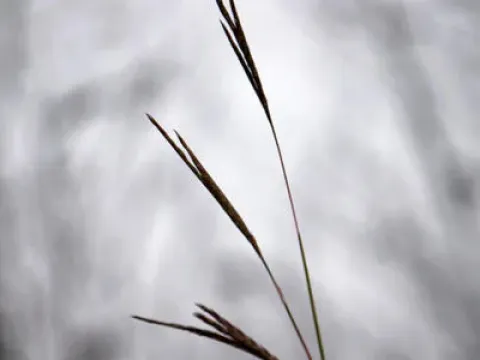
Bluestem
Andropogon
Sowing of Andropogon (bluestem) is typically performed in the spring when soil temperatures stabilize around 10-12 degrees Celsius. This timing ensures that seedlings capitalize on residual soil moisture for rapid establishment.
What the section contains


Bluestem
Fall seeding is also an option in certain regions, allowing the seeds to undergo natural stratification over the winter, which can improve germination rates. Seed depth must be carefully controlled, ideally set between 1 and 2 centimeters.
Row planting with spacing of 15 to 30 centimeters is recommended for field-scale production. Proper seed-to-soil contact, achieved through immediate post-sowing packing, is essential for uniform emergence across the field.
Seedlings develop slowly during the initial establishment phase, necessitating active weed management. Light harrowing or mechanical weeding is advised to reduce competition for light and nutrients during the early stages.
Seeding rates should be adjusted based on seed viability and the specific requirements of the Andropogon variety to ensure a healthy and uniform stand density.
Bluestem is a perennial grass within the Poaceae family, widely recognized for its robust nature and adaptation to semi-arid environments. It is highly valued for its ability to thrive where moisture is a limiting factor.
The crop performs best in well-drained, sandy, or loamy soils. It lacks tolerance for waterlogged conditions or high water tables, which can lead to root system decay and poor stand health over time.
With an extensive root system, Andropogon is capable of drawing moisture from deep soil profiles. This physiological adaptation makes it an excellent candidate for erosion control on slopes and exposed landscapes.
The plant exhibits significant heat tolerance, maintaining active physiological processes during extreme summer temperatures. This resilience makes it a reliable component of forage mixtures in continental climates.
Full sun exposure is a primary requirement for optimal development. Adequate solar radiation stimulates vigorous growth and contributes to the plant's overall longevity and productivity in managed pastures.
Yield capacity for bluestem is cumulative over several seasons, provided that the stand is managed to maintain vigor. Its ability to produce biomass during hot, dry spells provides a consistent forage source when other grasses go dormant.
Strategic application of nitrogen fertilizers at the start of the growing season can significantly boost biomass yields. However, application rates should be monitored to prevent lodging and ensure balanced growth.
Hay yields typically range from 1.5 to 3 tonnes per hectare, depending on local environmental conditions and the intensity of farm management. As a perennial crop, it offers sustainable yields for many years.
For grazing purposes, bluestem is known for its good regrowth capacity. Rotational grazing strategies are recommended to prevent overgrazing, which is critical for maintaining the plant's health and future production potential.
Economic viability is high in areas where traditional forage crops face failure due to drought. Bluestem remains a profitable investment for farmers aiming to secure reliable feed supplies.
Andropogon is generally resistant to many common cereal pathogens. However, in regions with high humidity, leaf rust or powdery mildew may occur. Management techniques such as timely harvesting help reduce disease pressure.
Insect pests, such as aphids and leafhoppers, can cause damage during periods of rapid growth. Routine field scouting is recommended to assess populations and determine if control measures are necessary.
Integrated pest management focuses on cultural practices, such as removing old plant material through grazing or cutting, which disrupts the life cycles of many local pests. This maintains the crop's ecological safety.
Weed competition remains the primary threat during the first year of establishment. Ensuring a clean seedbed before sowing reduces the need for herbicide intervention later in the season.
Overall, the crop requires minimal chemical protection, making it an excellent candidate for low-input agricultural systems and environmentally conscious farm operations.
The ideal window for harvesting bluestem for hay is during the booting or early flowering stage. This timing captures the best balance between biomass quantity and nutritional density, including crude protein.
Delayed harvesting leads to rapid increases in stem fiber and lignin content, which significantly lowers forage digestibility for livestock. Precision in timing is essential for maximizing the value of the harvest.
Mechanical harvesting with a mower-conditioner is the industry standard. Crushing the stems during the mowing process accelerates moisture release, which is vital for preserving nutritional quality in the field.
Hay should be raked and baled when moisture levels are appropriate to prevent nutrient loss through leaf shattering. Careful handling ensures that the protein-rich foliage remains part of the final product.
Storage in dry, well-ventilated structures is critical for maintaining the quality of the harvested bluestem until the winter season, ensuring that livestock receive high-quality supplemental feed.