
Bothriochloa
Bothriochloa
Bothriochloa is a significant genus of perennial grasses belonging to the Poaceae family. These grasses are well-known for their adaptability to tropical and subtropical climates, thriving in areas where other forage crops might struggle.
What the section contains


Bothriochloa
The plant requires well-drained, fertile to moderately fertile soil to reach its full production potential. It is notably drought-tolerant, making it an excellent choice for regions with erratic rainfall patterns or semi-arid conditions.
Optimal growth occurs in full sun exposure. The species is sensitive to extreme frost, which can damage the foliage and limit its distribution in colder latitudes. It prefers soils with a neutral pH, though it can tolerate a range of soil textures.
Agricultural practices for Bothriochloa emphasize its ability to withstand heat. During the establishment phase, ensuring the field is free from aggressive weed competition is crucial due to the grass's slow initial development.
Proper management of this crop involves maintaining soil fertility levels to support biomass accumulation. Regular monitoring of the stand density helps in managing the vigor and longevity of the grass sward.
Bothriochloa serves primarily as a forage resource for livestock grazing. It is appreciated for its ability to regenerate quickly after grazing or mowing, providing a steady supply of green matter throughout the growing season.
The nutritional value of the forage is highest during the vegetative stage. As the plants mature and reach the flowering phase, protein content decreases and fiber increases, necessitating strategic harvest timing for best quality.
Yield stability makes it a reliable component in pasture improvement programs. In many grazing systems, it is used in mixtures to provide consistent ground cover and reliable forage output under variable climatic conditions.
Beyond its value as fodder, Bothriochloa is frequently utilized for erosion control. Its robust root system binds soil particles effectively, making it a functional plant for rehabilitating slopes and degraded land.
In terms of biomass, well-managed fields can produce significant yields that contribute to overall farm sustainability. Integrating this grass into crop rotation or permanent pasture systems offers long-term benefits for agricultural land management.
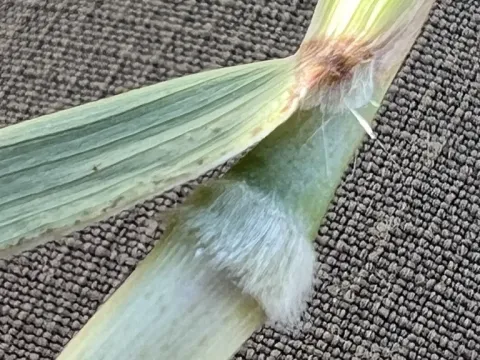
The crop is susceptible to common fungal diseases such as rust and smut, especially in humid conditions or where air circulation is restricted. Managing plant density and timing harvests are key cultural practices to mitigate these risks.
Insect pests, including aphids and various grass-feeding larvae, can cause damage to young shoots. Monitoring for early signs of infestation is recommended to determine if intervention is necessary to prevent widespread impact.
Poor drainage can lead to root rot issues, which compromise the plant's health and reduce its drought resilience. Maintaining an appropriate hydrological regime is essential to prevent physiological stress in the crop.
Weed infestation during the establishment year is a major challenge for Bothriochloa. If not properly controlled, competing weeds can stunt growth and significantly reduce the successful establishment of the grass stand.
Integrated pest management, including regular field inspections and appropriate grazing rotations, is highly effective in controlling threats. A proactive approach ensures the longevity and productivity of the pasture over multiple seasons.