
Bosnian fescue
Festuca bosniaca
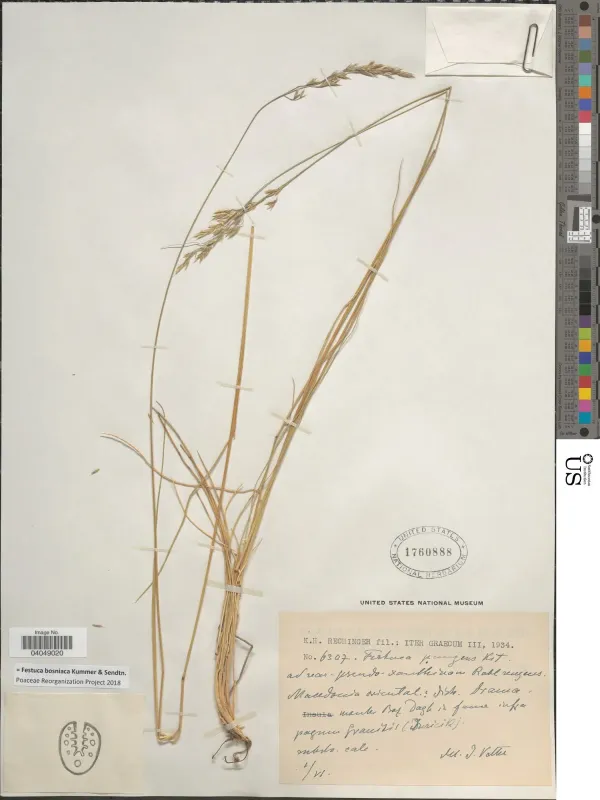
Description
Sowing dates
The sowing process is most successful when performed in early spring to capitalize on soil moisture reserves. Proper seedbed preparation, including moderate compaction to ensure seed-to-soil contact, is essential for achieving high germination rates for this perennial grass.
Growing requirements
Bosnian fescue (Festuca bosniaca) is a perennial grass species belonging to the family Poaceae. Originating from the Balkan Peninsula, this plant is well-adapted to mountainous terrains and rocky substrates, reflecting its resilience to harsh environmental conditions.
Botanically, the species is characterized by a dense tufted growth habit and a robust root system. These features allow it to maintain stability and nutrient uptake in shallow soils where other grasses might fail to establish a productive biomass.
Regarding climatic requirements, Bosnian fescue thrives in temperate regions with distinct seasonal shifts. It demonstrates impressive tolerance to cold winters and summer droughts, which makes it a sustainable choice for extensive forage production in marginal lands.
The soil requirements are relatively low, as the plant prefers well-drained, porous soils. It performs well even on soils with low organic matter content, provided there is adequate access to sunlight for photosynthetic processes during the peak growing season.
From an agrotechnical perspective, maintaining a healthy stand of Bosnian fescue involves minimal intervention. It does not require intensive fertilization, making it a low-input crop suitable for conservation-focused farming systems and erosion control projects.
Yield
Bosnian fescue is primarily utilized for livestock grazing and hay production. It offers a reliable supply of forage that remains palatable and nutritious throughout the grazing period, contributing to efficient animal weight gain and overall productivity.
Main diseases and pests
Common threats to the crop include fungal pathogens that thrive in high humidity, such as various species of rust and leaf spot. Effective management strategies involve avoiding overgrazing and ensuring sufficient airflow within the pasture canopy to reduce moisture retention.
Harvesting
Harvesting for hay should ideally occur before the plant reaches the full flowering stage to maximize protein content. Using appropriate mowing machinery ensures uniform cutting and promotes vigorous regrowth of the stand after the harvesting cycle is complete.