
Boeotian wheat
Triticum boeoticum
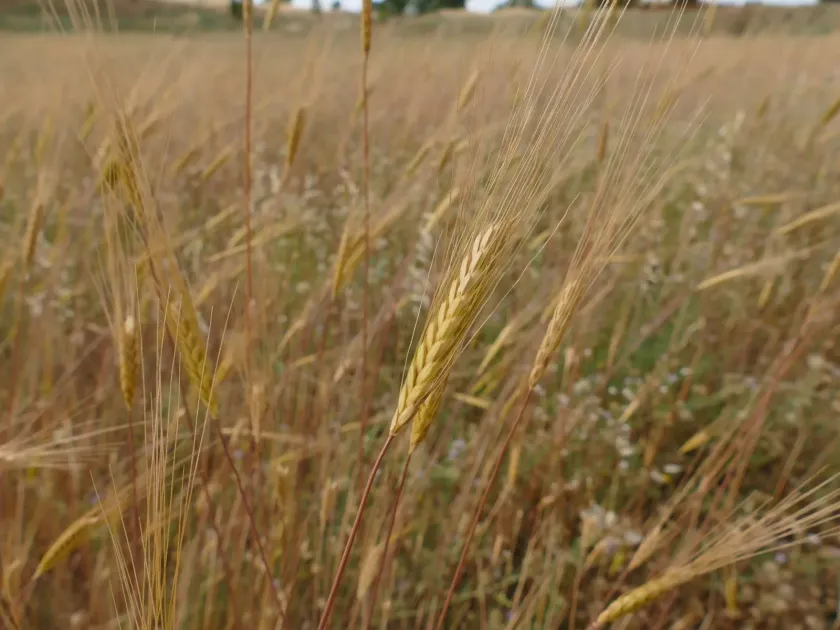
Description
Sowing dates
Boeotian wheat, botanically classified as Triticum boeoticum, is a wild grass species that serves as the wild ancestor of modern cultivated einkorn wheat. In its natural habitat, it relies on autumn germination to establish seedlings before the onset of winter.
When cultivated in experimental trials, seeds are typically sown in late autumn to mimic natural cycles. This winter dormancy period is essential for breaking seed dormancy and ensuring uniform germination in early spring.
The optimal planting depth ranges between 3 and 5 centimeters. Proper soil contact is crucial to allow the developing roots to establish quickly in potentially dry or variable spring weather conditions.
Seed rates for this wild species should be relatively low compared to commercial wheat, as the plants exhibit significant tillering capability. Providing adequate space per plant is vital to ensure robust development of individual spikes.
Successful sowing requires clean, weed-free seedbeds. Because of its wild nature, Boeotian wheat competes poorly with aggressive weeds during its early seedling growth stages, making early season management necessary.
Growing requirements
As a member of the Poaceae family, Boeotian wheat is remarkably well-adapted to rocky, limestone-rich soils. It originates from the Near East and the Balkans, regions defined by hot, dry summers and cool, wet winters.
The species demonstrates exceptional resilience to abiotic stress, particularly drought and cold temperatures. This hardiness makes it a subject of great interest for modern wheat breeders looking to improve climate resilience.
The plant thrives in full sunlight. High light intensity is a limiting factor for biomass accumulation, so choosing sites with southern exposure is beneficial for optimal spike development and grain filling.
It prefers neutral to slightly alkaline soil pH levels. While it is not demanding in terms of soil fertility, it is highly sensitive to waterlogging, which can cause root rot and significantly reduce yield potential.
Agricultural management should avoid excessive nitrogen fertilization. High nutrient levels often lead to vegetative overgrowth and lodging, which is detrimental to the development of the fragile, wild-type spikes.
Yield
The yield potential of Boeotian wheat is significantly lower than that of modern, domesticated wheat cultivars. The primary evolutionary strategy of this plant is to disperse seeds, not to maximize grain production per unit area.
A critical characteristic is the shattering rachis, which causes the spike to disintegrate upon maturity. This adaptation makes large-scale mechanical harvesting extremely difficult and results in significant yield loss if not managed properly.
Grain production is characterized by small, single-grained spikelets. While the yield is low by industrial standards, the nutritional density—specifically the concentrations of proteins, lipids, and minerals—is often superior to common wheat.
The economic role of this species is currently limited to genetic research. It serves as a vital reservoir of traits, including disease resistance and stress tolerance, which can be introgressed into modern varieties.
There is a growing niche market for ancient grains produced in small-scale farming systems. Such production targets health-conscious consumers who value the unique genetic purity and high phytochemical content of wild wheat.
Main diseases and pests
Boeotian wheat is naturally resistant to many pests and diseases that affect commercial wheat. This inherent resistance is a major focus for agricultural scientists attempting to enhance crop security.
However, under high-humidity conditions, the crop can be susceptible to fungal pathogens such as rusts and powdery mildew. Regular monitoring during the spring growth phase is recommended to assess disease pressure.
Insects like cereal flies and wheat beetles can cause localized damage. Integrated pest management strategies are preferred to maintain the health of the wild population without resorting to aggressive chemical usage.
Root-dwelling pests such as wireworms can be problematic if the crop is planted following grasses or in fields with high residual weed populations, necessitating careful site selection.
Preventative cultural practices, such as maintaining proper plant spacing and ensuring good airflow through the crop canopy, remain the most effective methods for mitigating pathogen spread.
Harvesting
Harvesting Boeotian wheat requires precise timing due to the shattering nature of the rachis. If the crop is left to dry fully in the field, the spikes will drop, causing near-total harvest failure.
The optimal harvest window is at the late milk stage or early dough stage. During this phase, the grains are well-developed, but the rachis remains sufficiently intact to allow for harvesting without excessive shattering.
Mechanical harvesting with standard combines is generally unsuitable. Specialized equipment or manual harvesting methods, such as reaping sheaves and drying them under cover, are standard practice for this species.
Post-harvest processing involves threshing and dehusking. The tough glumes that protect the grain are difficult to remove, requiring specialized dehulling machinery to obtain clean, food-grade kernels.
Final storage should be in clean, cool, and dry environments. Because the grain retains its protective husks during storage, it is generally resistant to insect damage, provided the moisture content is kept below 13%.