
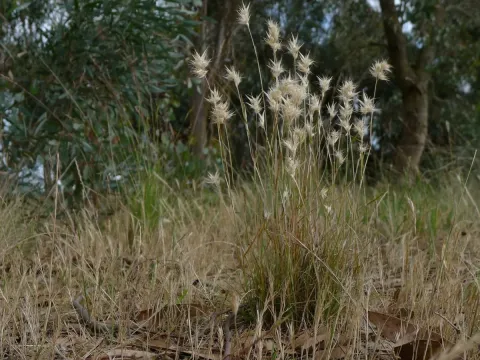
Danthonia auriculata
Danthonia auriculata
Danthonia auriculata, commonly known as a type of wallaby grass, is a perennial grass belonging to the Poaceae family. This species is indigenous to Australia and is highly regarded for its ability to thrive in challenging environments.
What the section contains
Danthonia auriculata
The plant demonstrates remarkable drought tolerance, making it an excellent candidate for semi-arid regions. It is well-adapted to surviving extended dry spells while maintaining its biological integrity and forage quality.
Regarding soil preferences, it favors well-drained loamy or sandy soils. It is critical to avoid waterlogged conditions, as the plant's root system is susceptible to rot when exposed to stagnant water for prolonged periods.
Botanically, it forms dense tufts or tussocks, which provide significant cover for the soil surface. This structure helps minimize moisture evaporation and protects the topsoil from wind and water erosion, making it useful in land reclamation.
The species is highly valued in pastoral farming for its year-round green growth. It provides a reliable source of nutrition for livestock, often remaining palatable even when other grasses have entered dormancy due to heat stress.
Overgrazing remains the primary threat to the longevity of Danthonia auriculata stands. If livestock is allowed to graze the grass too short for too long, the plant cannot replenish its energy stores in the roots.
Fungal diseases such as leaf rusts can occur in high-humidity microclimates. Maintaining an open canopy through managed grazing or selective mowing is the best preventive strategy against such pathogens.
Invertebrate pests, including certain grass-feeding insects, may impact yield if their populations reach outbreak levels. Integrated pest management strategies that encourage beneficial insects are recommended.
Invasive weeds pose a constant threat to the establishment of new stands. Proper site preparation and the maintenance of a vigorous grass cover are essential to suppress the colonization of undesirable weed species.
Chemical sensitivity should be noted, as indiscriminate use of herbicides can damage the stand. Always utilize selective treatments and strictly follow application guidelines tailored for native grass species.