
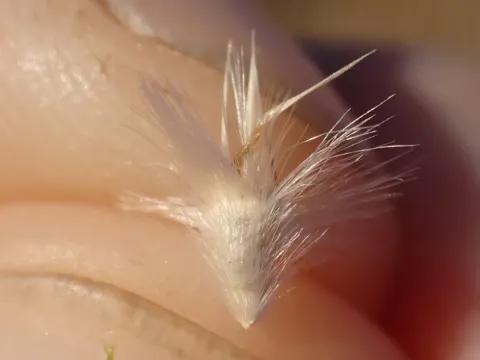
Danthonia carphoides
Danthonia carphoides
Danthonia carphoides, commonly known as short wallaby grass, belongs to the Poaceae family. It is a perennial grass species native to parts of Australia, adapted to temperate environments and various grassland ecosystems.
What the section contains
Danthonia carphoides
The species is highly valued for its drought tolerance. It remains photosynthetically active during dry periods, which makes it a crucial resource for livestock nutrition in regions where rainfall is erratic and unreliable.
Regarding soil requirements, it thrives in well-drained loams and sandy soils. While it can survive on soils with lower fertility, optimal biomass production is observed on soils with balanced nutrient levels and neutral pH.
A distinctive botanical trait of this species is its ability to produce cleistogamous flowers (closed flowers that self-pollinate) near the base of the plant. This reproductive strategy ensures seed set even in adverse weather conditions.
It prefers sunny environments and does not tolerate heavy shade. Proper site selection is essential to prevent the plant from being outcompeted by taller, more aggressive vegetation in nutrient-rich or wetter areas.
The primary use of Danthonia carphoides is as a forage crop for grazing animals. It provides high-quality pasture during spring and autumn, offering essential nutrients for sheep and cattle production.
In terms of productivity, this grass exhibits a steady growth rate and shows excellent recovery after grazing. Its ability to regrow from crown buds makes it highly sustainable for long-term rotational grazing systems.
The nutritive value remains significant even when the plant becomes semi-dormant during dry spells. This resilience ensures a reliable food source for livestock throughout the year, reducing the need for supplementary feeding.
The plant’s deep and fibrous root system helps improve soil structure by increasing organic matter content. This biological activity contributes to long-term soil health and moisture retention in the grazing fields.
Sustainable yield management involves controlled grazing intensity. By allowing the plants sufficient time to recover between grazing periods, farmers can ensure the persistence of the pasture for many years.
The species is generally hardy but can be susceptible to fungal root pathogens if the soil remains waterlogged for extended periods. Proper land leveling and drainage are critical to maintain a healthy stand.
Insect pests that target the crown or roots are the most common threats. Periodic monitoring is recommended to identify signs of infestations, such as patch thinning or premature yellowing of the leaf blades.
Overgrazing poses the greatest risk to the stability of Danthonia carphoides stands. Continuous heavy grazing depletes root reserves, causing the grass to lose its competitive edge against invasive weeds.
To maintain high productivity, it is essential to manage weed competition, especially during the establishment phase. Cultural practices such as light harrowing or strategic resting of the pastures can help suppress weeds.
Climate factors such as extreme rainfall events can impact the density of the grass. Adapting the stocking rate based on the season is the most effective strategy to mitigate potential losses due to environmental stress.