
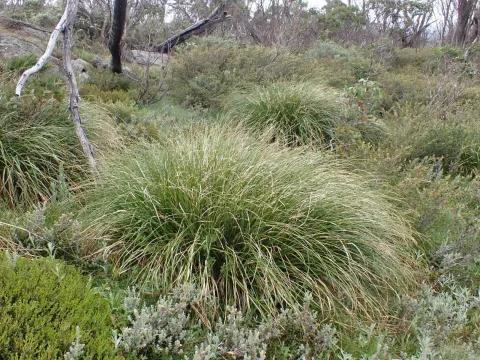
Danthonia frigida
Danthonia frigida
Danthonia frigida is a perennial grass belonging to the Poaceae family. This species is specifically adapted to high-altitude environments, thriving in cool, rugged regions where many other forage grasses fail to establish.
What the section contains
Danthonia frigida
Originating from the Andean regions, this plant has evolved to withstand low temperatures and the nutrient-poor soils characteristic of mountain landscapes. It is a key component of alpine ecosystems, contributing significantly to soil stabilization.
Climatic requirements are focused on cold tolerance. The plant exhibits high resilience to diurnal temperature fluctuations and can survive in areas with short growing seasons, making it an ideal candidate for mountain farming.
Regarding soil preferences, it favors well-drained, acidic to neutral substrates. Its root system is deep and expansive, allowing it to extract moisture and nutrients effectively even in thin, rocky soils common at high altitudes.
Cultivation practices should respect the slow growth habit of the species. Proper establishment requires weed control during the seedling stage, and ensuring the seedbed is free from aggressive competition is essential for long-term survival.
The primary economic use of Danthonia frigida is as high-altitude pasture forage. It provides essential nutrition for grazing livestock in regions where temperate grasses would succumb to cold stress.
In terms of forage yield, the species is classified as an extensive crop. Productivity is dependent on environmental conditions, but rotational grazing can significantly boost biomass accumulation over several seasons.
Forage quality is highest during the vegetative stage. Farmers are encouraged to manage grazing periods carefully to ensure that the plant retains enough leaf area for regrowth after being grazed or harvested for hay.
There is increasing interest in its potential for land reclamation. As a pioneer species in alpine zones, it can be used to stabilize slopes and prevent soil erosion, providing ecosystem services alongside agricultural value.
Research into improving the leaf-to-stem ratio through selective breeding may eventually lead to higher quality forage varieties, potentially increasing the overall profitability of high-altitude livestock operations.
The main threats to Danthonia frigida include common fungal pathogens like rusts and leaf spots. These are particularly prevalent during periods of high humidity and fog, which are frequent in mountainous climates.
Insect pests such as grass-feeding larvae can damage the foliage, reducing both the biomass and the photosynthetic capacity of the plant. Monitoring and integrated pest management are crucial to maintain healthy stands.
Overgrazing poses a significant risk to the longevity of the plant community. When grazed too short, the plant loses its ability to store necessary carbohydrates in its crown, leading to a decline in vigor over successive years.
Invasive species can also threaten the integrity of Danthonia meadows. Once the native turf is disturbed, opportunistic weeds may colonize the area, outcompeting the grass and lowering the quality of the pasture.
To mitigate these risks, managers should implement conservative grazing regimes that allow for rest periods. Maintaining a balanced nutrient cycle and monitoring for early signs of disease are the most effective management strategies.