
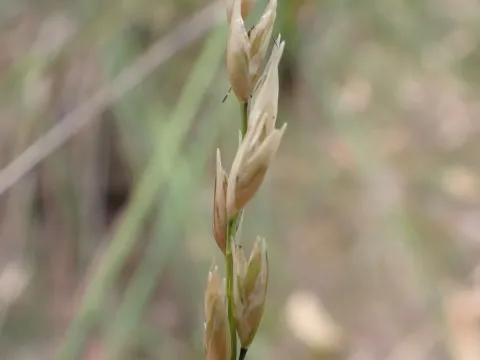
Danthonia
Danthonia
Danthonia is a genus of perennial grasses belonging to the Poaceae family. In agricultural settings, sowing is typically performed in the spring once soil temperatures reach 10–12 degrees Celsius.
What the section contains


Danthonia
Adequate soil moisture in the top layer is essential for successful germination. In temperate regions, the optimal window is late April or early May, which allows seedlings to establish their root systems before the onset of summer heat.
Precise planting depth is critical; due to their small size, seeds should be buried no deeper than 1–2 centimeters. High-quality seeds with strong germination energy are crucial for achieving optimal stand density.
Autumn sowing is only viable in regions with mild winters where there is no risk of deep soil freezing after emergence, which could otherwise kill young seedlings.
Seeding rates depend on the intended use: higher densities are required for pasture establishment compared to seed production plots. Local climate conditions dictate the specific rates for the best results.
Danthonia is known for its ecological plasticity and ability to thrive on poor, acidic, and dry soils where other grass species struggle. It is naturally found across North and South America, Australia, and parts of Africa.
The crop prefers sunny locations as it is highly shade-intolerant. Excessive shading will stunt tiller development and significantly reduce overall biomass production.
While moderately demanding regarding moisture, Danthonia is recognized for its superior drought tolerance. Its deep and extensive root system allows it to access water reserves that are unavailable to shallower-rooted plants.
The plant adapts well to various soil types, ranging from sandy and rocky terrains to clay soils. However, peak productivity is observed in well-drained soils with a neutral or slightly acidic pH.
From an agronomical perspective, Danthonia does not require intensive fertilizer input, as it is evolved to manage in nutrient-poor environments. Nevertheless, modest applications of phosphorus and potassium can enhance yield.
The primary use of Danthonia is in the establishment of grazing pastures and the stabilization of erosion-prone soils. Its hardiness ensures reliable forage supply even in lean years.
Green biomass yield is directly dependent on grazing management and moisture availability. In natural meadow conditions, it forms dense sod that withstands heavy grazing pressure.
For hay production, it is recommended to harvest before the full flowering phase to preserve high nutritional content. Proper timing of cuts encourages vigorous regrowth through improved tillering.
Seed production is considered moderate due to the biological nature of the flowering and ripening process. Harvest is often challenged by the tendency of seeds to ripen unevenly in the head.
The overall productivity of Danthonia makes it a valuable component in the restoration of degraded rangelands, especially in regions with limited irrigation potential.
Danthonia exhibits strong natural resistance to most common grass diseases, such as rust and powdery mildew. This trait makes it a highly attractive option for low-input or organic farming systems.
However, under conditions of high humidity and dense canopy, fungal leaf infections can occasionally occur. Maintaining proper airflow through the canopy is the best preventative management strategy.
Insects that target reproductive structures and seeds during their development phase pose the greatest risk. Regular scouting of the fields allows for timely intervention using biological control methods.
Wireworm damage to root systems may occur in fields recently transitioned from long-term grasslands. An integrated pest management approach effectively mitigates these risks.
Overall, the phytosanitary status of Danthonia stands remains generally stable, requiring only periodic monitoring during the peak growing season to ensure continued plant health.
For green fodder, harvest should take place during the stem elongation or early heading phase when protein content in the foliage is at its peak, ensuring maximum digestibility for livestock.
When producing seeds, it is vital to mitigate seed shattering, which often occurs at full maturity. Harvest should be conducted using swathing or direct combining once the seeds reach the dough stage.
Post-harvest hay management includes drying in windrows to prevent rot and preserve essential vitamins and nutrients. Efficient drying protocols are key to high-quality forage.
When used as pasture, grazing intensity must be strictly managed to prevent overgrazing, which can weaken the stand and impair the plant's ability to regenerate effectively.
Proper harvesting practices and post-harvest rest periods are crucial for ensuring the longevity of the stand and maintaining high productivity levels over many years.