
Danthonia bipartita
Danthonia bipartita
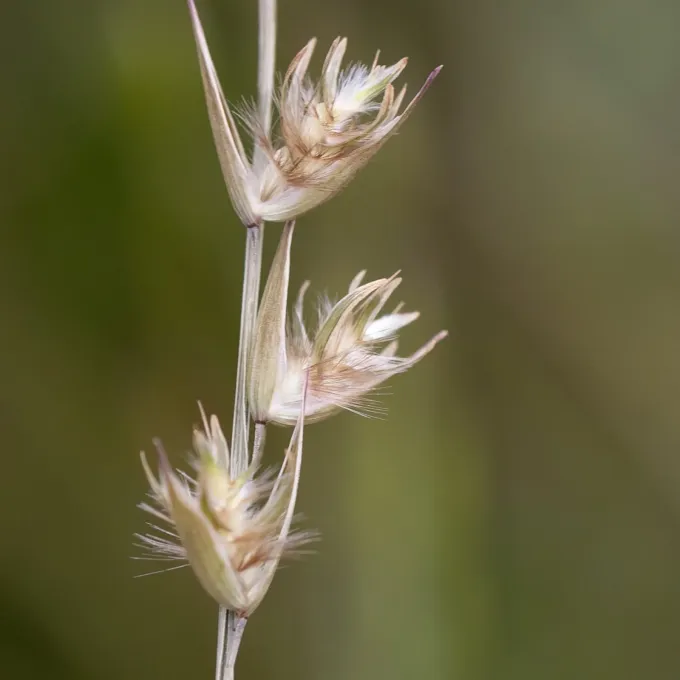
Description
Growing requirements
Danthonia bipartita, commonly known as a type of wallaby grass, is a perennial grass species belonging to the Poaceae family. It is native to Australia and is highly regarded for its adaptation to arid and semi-arid environments.
The species is well-known for its exceptional drought tolerance and its ability to thrive in poor, sandy, or stony soils. Its deep root system allows it to reach moisture deep in the soil profile, ensuring survival during intense summer heat.
Botanically, the plant grows in dense tussocks, which is an effective strategy for moisture conservation. The leaves are narrow and often exhibit a grey-green color, providing a natural adaptation to high solar radiation levels.
For successful cultivation, the species requires well-drained soil and high levels of sunlight. It is sensitive to waterlogging, so site selection should prioritize areas with adequate natural drainage systems.
As a long-lived perennial, it maintains structural integrity over many years, making it an excellent choice for stabilizing pastures and preventing soil erosion in drought-prone regions.
Yield
Danthonia bipartita is primarily utilized as a high-quality forage crop for extensive livestock production. It remains palatable and nutritious even during the dry season, providing essential fodder when other grasses have senesced.
The grazing value of this species is high, as it supports the nutritional requirements of sheep and cattle throughout the year. Its ability to regrow quickly after grazing episodes contributes to high pasture productivity.
In farming operations, incorporating this grass into a pasture mixture can significantly reduce reliance on supplemental feed. This improvement in grazing capacity translates into better economic performance for livestock managers.
The forage biomass produced by this species is rich in minerals and fiber, supporting healthy livestock development. Strategic grazing management can maximize the nutritional yield per hectare.
Farmers appreciate the species for its persistence, as it does not require frequent reseeding, leading to lower long-term maintenance costs and increased agricultural stability.
Main diseases and pests
This grass species exhibits strong natural resistance to common cereal and forage diseases. The lack of significant pathological pressure makes it a low-input crop suitable for sustainable farming practices.
Pest management is rarely an intensive issue for Danthonia bipartita. Occasional problems may arise from insects feeding on developing inflorescences, but these rarely reach economic injury thresholds.
The primary threat to the longevity of a stand is overgrazing. Continuous heavy pressure from livestock can deplete root reserves and weaken the tussocks, allowing less desirable weeds to invade the pasture.
Weed competition during the establishment phase is critical. Providing a clean seedbed and managing inter-row space helps ensure that young plants establish themselves successfully without being overwhelmed.
Overall, the species is remarkably resilient. By practicing rotational grazing and monitoring field conditions, farmers can maintain healthy stands for many years with minimal chemical intervention.