
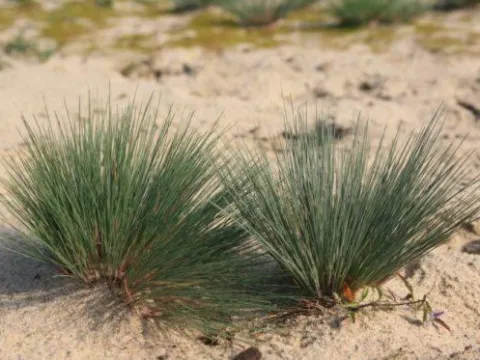
Corynephorus divaricatus
Corynephorus divaricatus
Corynephorus divaricatus is a perennial grass species belonging to the Poaceae family. It is specifically adapted to survive in environments with poor soil quality and high sand content.
What the section contains
Corynephorus divaricatus
The natural reproductive cycle of this species involves wind dispersal of seeds, which typically occurs at the end of the summer season to coincide with favorable climatic conditions.
For artificial cultivation or reclamation projects, sowing is recommended during early spring or autumn. This timing ensures that young plants establish deep roots before the onset of extreme seasonal conditions.
Seeds should be broadcasted on the surface rather than buried deeply. Shallow sowing is crucial, as the small seeds lack the stored energy reserves required to emerge from deep soil layers.
Proper density of seeding is essential; excessive competition among individual plants can hinder the formation of the dense root mat that is characteristic of this species.
Corynephorus divaricatus is a quintessential psammophyte, thriving in loose, sandy substrates where water drains quickly. It is essentially non-existent in fertile or heavy loamy soils.
The plant demonstrates remarkable drought tolerance, which is its most significant survival trait. Its root system is structured to reach deep into the soil to access sparse moisture during extended periods of heat.
It requires full sun exposure to flourish. The presence of shade from taller vegetation or buildings will lead to a rapid decline in the plant's vitality and overall population density.
Thermal stability is high; the species is well-adapted to the intense temperature fluctuations found in open sand dune ecosystems, including freezing winter temperatures.
Minimal management is required for this species. In fact, anthropogenic interventions like fertilization or intensive soil cultivation are detrimental to its natural growth and ecological function.
The agricultural yield of Corynephorus divaricatus is low, as it is not cultivated for forage or biomass production. Its nutritional profile does not meet the standards required for commercial livestock feed.
However, its economic value is realized through its role in ecosystem services. It is an invaluable plant for stabilizing shifting sand dunes and protecting agricultural soils from severe wind erosion.
In landscaping, this species is highly appreciated for its aesthetic value in creating minimalist, naturalistic gardens. Its delicate panicles add texture and a wild aesthetic to sandy landscape designs.
While not a standard commodity crop, its "yield" is measured in hectares of stabilized land and prevented soil loss, making it a key component in regional environmental conservation projects.
For large-scale reclamation, it is often sown in combination with other dune-stabilizing grasses to ensure long-term soil cover resilience.
Corynephorus divaricatus is highly resistant to standard fungal and bacterial pathogens that typically affect agricultural cereal crops. Its high silica content provides a physical barrier against many threats.
Insects rarely cause significant damage to the plant population. The species has evolved to withstand mechanical stress, allowing it to recover quickly from minor environmental disturbances.
The primary threat to the species is overgrazing by livestock. Excessive trampling destroys the delicate root-bound crust of the sandy soil, preventing the grass from effectively anchoring the sand.
Urban development and recreational use of sandy areas also pose significant threats. The disruption of the natural soil structure often leads to the complete loss of local populations.
Furthermore, nitrogen runoff from adjacent agricultural fields can alter the soil chemistry, facilitating the growth of invasive species that outcompete this specialized grass.