
Creeping alkaligrass
Puccinellia phryganodes
Description
Growing requirements
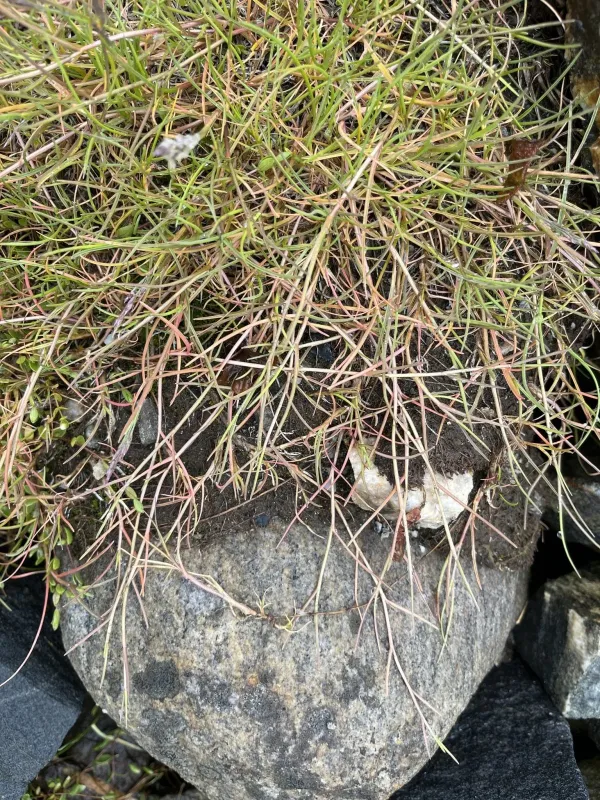
Creeping alkaligrass (Puccinellia phryganodes) belongs to the Poaceae family and is recognized as a key halophytic species in arctic and subarctic coastal environments. It is a perennial grass species that excels in extreme saline habitats where other vegetation fails to thrive.
Botanically, the plant is distinguished by its creeping stems that produce roots at the nodes, forming dense, prostrate mats. This morphological adaptation allows the plant to thrive in tidal zones, effectively binding the soil and preventing erosion caused by wave and tide actions.
The environmental requirements for this grass include high soil salinity, consistent moisture levels, and a cool climate. It is not typically grown in standard agricultural fields but is highly valued for revegetating degraded coastal salt marshes and hypersaline soils.
Regarding cultivation, creeping alkaligrass thrives in anaerobic or semi-anaerobic conditions common to coastal marshlands. Its primary agricultural benefit is its ability to convert non-arable, salt-affected land into productive grazing pastures for resilient livestock.
Agricultural use centers on sustainable land management of coastal areas. By utilizing this species, farmers can protect soil integrity while providing a nutritious, salt-tolerant forage source that survives under conditions that would be lethal to traditional cereal crops.
Main diseases and pests
Threats to creeping alkaligrass populations primarily involve overgrazing, which compromises the integrity of the mat-like turf. When the turf is destroyed, the underlying soil becomes susceptible to significant erosion, leading to the loss of topsoil in coastal regions.
Disease pressures are minimal due to the extreme environmental conditions in which the plant grows. Salt concentrations that define its habitat typically inhibit the growth of most common fungal pathogens that affect temperate-zone forage grasses.
Pest issues are rarely of economic significance for this wild-type grass. While various insects may graze on the foliage, the plant's high growth rate and regenerative capacity usually allow it to withstand such pressures without human intervention or chemical control.
Human-induced environmental degradation is the most serious threat to the species' survival. Pollution from coastal industrial activity, including oil spills or heavy metal accumulation, can irreversibly damage the delicate balance of salt marshes.
Integrated management is essential for maintaining these areas. Protection strategies should focus on preventing habitat destruction and ensuring that grazing patterns are balanced to allow for continuous growth and root system expansion of the alkaligrass.