
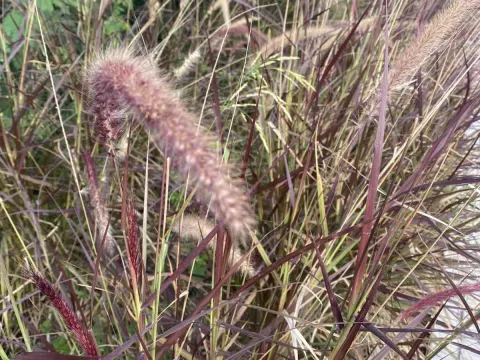
Copper burr grass
Cenchrus cupreus
Copper burr grass (Cenchrus cupreus), belonging to the Poaceae family, is a highly resilient perennial forage grass. Optimal sowing occurs when the soil temperature consistently reaches 15-18 degrees Celsius, ensuring favorable conditions for seed germination.
What the section contains
Copper burr grass
Success depends on maintaining adequate soil moisture during the emergence phase. The seeds are small and should be placed at a shallow depth, usually not exceeding 1-2 centimeters, to facilitate uniform and rapid germination across the field.
Preparation of the seedbed is essential, as the crop requires loose soil to develop its primary root system effectively. Precise mechanical sowing is recommended to maintain the correct spacing, which minimizes the need for manual thinning later in the growth cycle.
Applying light pressure via a roller after sowing is a standard practice to improve seed-to-soil contact. This enhances capillary action, pulling moisture toward the seed and creating a stable environment for initial growth.
Since this grass exhibits slow development in its early stages, keeping the field free of competitive weeds is crucial. Early intervention ensures that the Cenchrus seedlings can establish themselves before the onset of summer heat.
As a xerophytic species, Copper burr grass is uniquely adapted to arid and semi-arid environments. Its drought tolerance is one of its most significant agricultural advantages, allowing it to survive and produce biomass even under limited precipitation.
The plant thrives in well-drained sandy or loamy soils. It is particularly sensitive to waterlogging, as poorly drained soil can lead to root rot and diminished vigor. High-elevation fields with good aeration are generally considered ideal.
Sunlight is a key factor for this species; it is an obligate heliophyte that requires full exposure to the sun to maximize its photosynthetic potential. Shaded areas significantly reduce forage yields and overall plant density.
Soil nutrient management should focus on nitrogen and potassium levels. Nitrogen supports vigorous vegetative growth during the peak season, while potassium acts as a crucial element in strengthening the plant's resistance to environmental stress and overwintering.
Proper management of the soil pH—ideally within the neutral to slightly alkaline range—will promote maximum nutrient uptake. With consistent monitoring of soil health, Cenchrus stands can remain productive for several consecutive years.
The productivity of Cenchrus cupreus is highly responsive to agricultural management. Under optimal water and nutrient levels, the crop supports multiple harvests per season, providing a steady supply of high-quality forage.
For best nutritional value, harvesting should occur before the plants transition into the reproductive phase. Once the stalks become woody and the inflorescences fully develop, the crude fiber content rises sharply, reducing the overall digestibility for livestock.
Yields of dry matter typically range from 5 to 12 tons per hectare, depending on local climate conditions and fertilizer usage. Applying nutrients after each harvest helps the plants replenish energy reserves, promoting vigorous regrowth.
Seed production is another viable economic path for this crop. With proper management and protection from birds, producers can yield up to 600 kg of viable seeds per hectare, satisfying the demand for new planting materials.
Copper burr grass is highly palatable, making it an excellent feed source for various livestock species. Its ability to maintain nutrient density under hot conditions makes it a critical resource for sustainable farming in dry climates.
Fungal diseases, particularly rusts and leaf spots, represent the most frequent threat to the crop, especially in areas with high relative humidity. Proper field spacing to ensure airflow can significantly mitigate these risks.
Pests such as aphids and leafhoppers are known to feed on the sap of the stems and leaves. Regular scouting is essential to identify infestations early before they reach levels that would impact the overall health and vitality of the grass stand.
Root rot is primarily associated with poor irrigation management or stagnant water conditions. By prioritizing good soil drainage and avoiding over-irrigation, farmers can prevent the vast majority of soil-borne pathogen issues.
Birds can cause significant losses during the seed ripening phase, often requiring protective measures such as netting or deterrents. Monitoring fields during the late summer ensures that the harvest occurs at the right moment.
Integrating crop rotation and maintaining good field sanitation are the best defenses against persistent pests. Avoiding chemical overuse helps protect beneficial soil microorganisms that contribute to the long-term health of the crop.
Harvesting for forage should be timed when the vegetative biomass is at its peak. Mowers should be set to leave at least 5-7 centimeters of stubble, which is vital for the plant to regenerate successfully for subsequent cuts.
When preparing hay, the use of mechanical conditioners (crimpers) is highly recommended. These tools crack the stems, allowing the grass to dry significantly faster and preventing the degradation of nutrients that occurs with prolonged sun exposure.
Seed harvesting often requires a two-stage process because the seeds ripen unevenly. Cutting the stalks and allowing them to mature in windrows for a few days can help prevent excessive seed shatter and loss.
Post-harvest cleaning is mandatory to remove debris, ensuring the seeds are ready for storage. A cool, dry, and well-ventilated warehouse environment is necessary to keep the seeds viable and prevent microbial growth.
Final field maintenance in the autumn involves removing leftover biomass, which prepares the root systems for dormancy and ensures a strong, uniform emergence in the following spring season.